Secure Payments
10% Discount on 3+ Patterns
Secure Payments
Your card information will not be stored on our servers
10% Discount on 3+ Patterns
Buy 3 or more patterns for a 10% discount
Immediate Download
Immediate & unlimited downloads
Your card information will not be stored on our servers
Buy 3 or more patterns for a 10% discount
Immediate & unlimited downloads
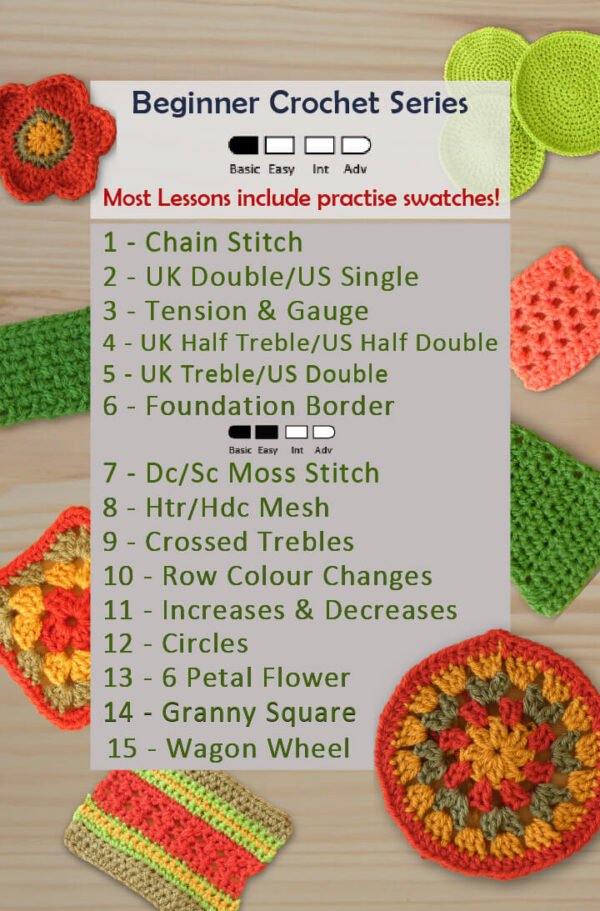
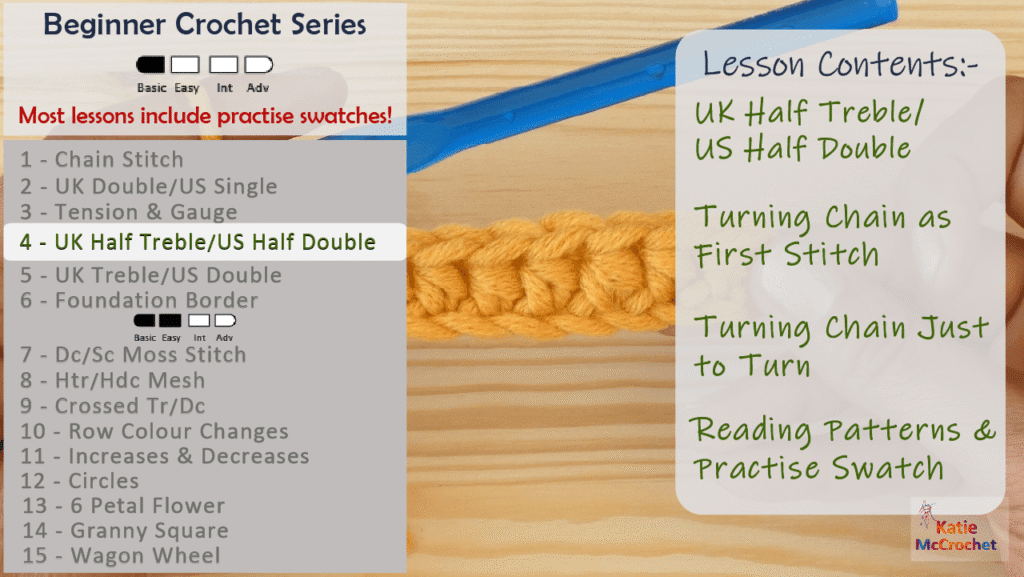
Welcome to Lesson 4 of the Beginner Crochet Series!
Are you ready to learn 4 methods to crochet the half treble (half double) stitch? Then this simple (yet informative!), half treble (half double) tutorial is for you!
It will cover crochet turning chains of 1 or 2, when a turning chain counts as a stitch and stitch placement.
At the end, there are 2 small practice swatches to practice your new stitch. I’ll start you off with the first few rows, whilst teaching you how to read crochet patterns.
I’ll be using UK terms, US Terms in brackets.
For those that prefer learning by watching, at the bottom of the page is the video version of the lesson.
“If I were able to leave you with only one piece of crochet advice, it would be to always have fun. Learn the basics, but then just go crazy with your crafty self!” – Twinkie Chan
Twinkie Chan
The half treble (half double) stitch is taller than the Dc (Sc) stitch, so in general it has a turning chain of 2. However, throughout my time following crochet patterns, the basic half treble (half double) stitch seems to have the most variations.
The actual stitch is the same between the 4 methods, the difference lays in the amount of chains to turn and the placement of the first and last stitch.
Some crochet designers have a turning chain of 2, others a turning chain of 1, some count it as a stitch and others don’t.
So when does the half treble (half double) turning chain counts as a stitch? Find out as you learn 4 methods to crochet the half treble (half double) step by step!
The crochet abbreviation for the half treble (half double) stitch is Htr(Hdc) – I’ll be using it straight of the bat.
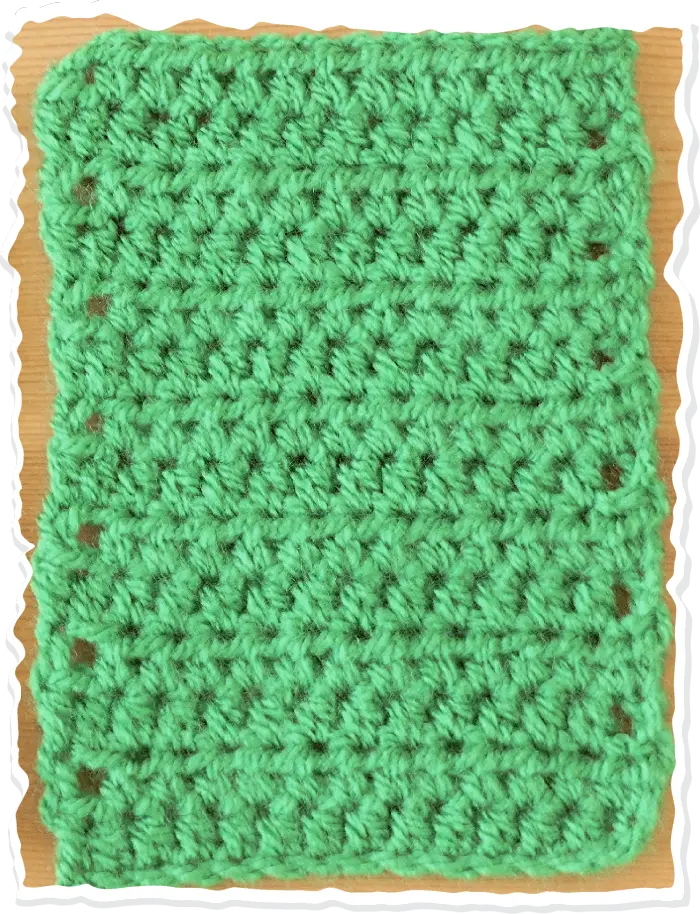
Here’s a little half treble (half double) inspiration before we start 🙂
We’ll be making 10 Htr (Hdc) for each method.
Method 1 to crochet half trebles (half doubles) stitches uses a turning chain of 2 which is counted as the 1st stitch. This leaves 9 stitches to make chains for. So 2 chains for turning/1st stitch + 9 chains for the remaining stitches = 11 chains in total.
As chains 1 & 2 will be the turning chain/1st stitch, the row starts in the 3rd chain from the hook.
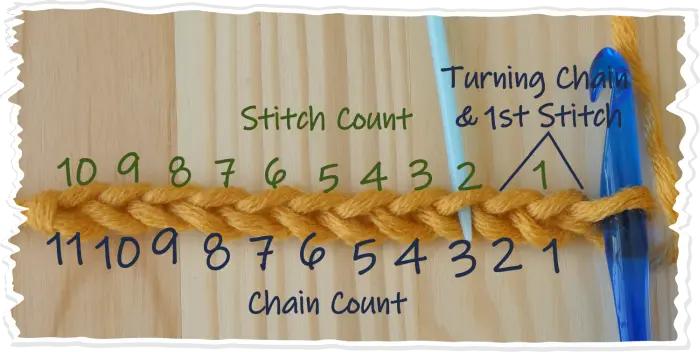
Turning chain counted as stitch, starts in 2nd stitch
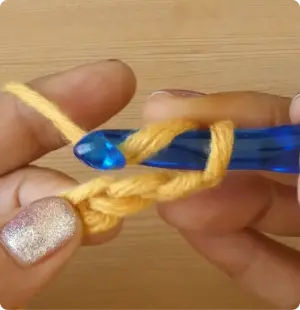
The is a taller stitch than double crochet, so yarn over before going in the chain.
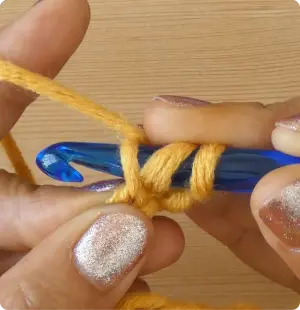
Go into the top of the V of the 3rd chain. There’s a total of three strands over the hook.
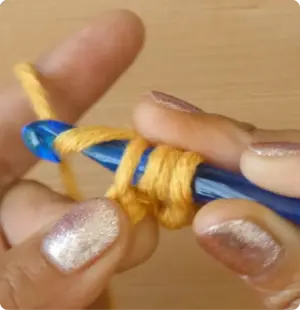
Yarn over again,
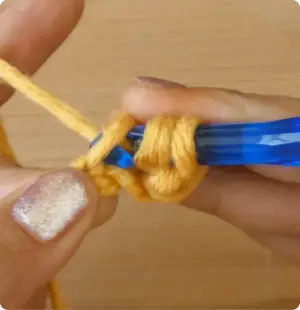
and pull the yarn back through the chain.
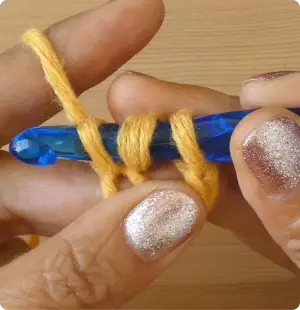
Pull the hook up. There are 3 loops on the hook. Make sure the loops are at the same height.
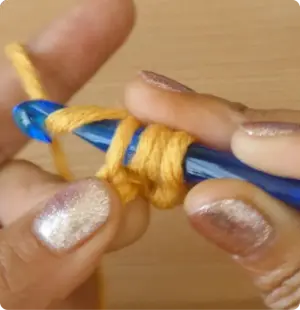
Yarn over again
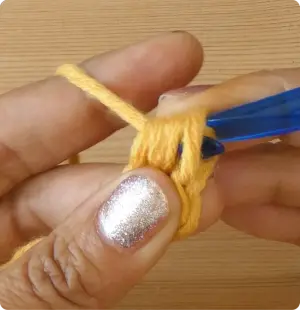
Hold the base of the chain, and pull the yarn through all 3 loops on the hook.
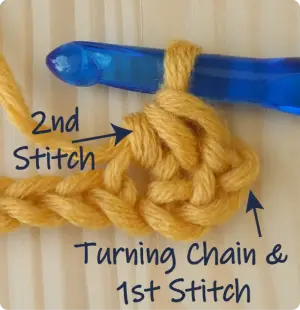
There’s 1 loop left on the hook and that’s your first Htr (Hdc) stitch made!
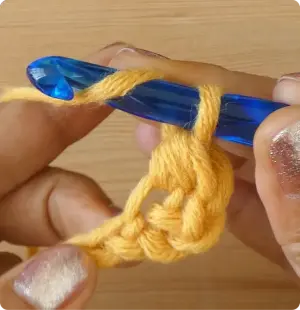
Yarn over to start the next stitch.
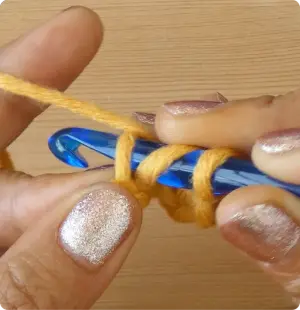
Push the hook into the next chain.
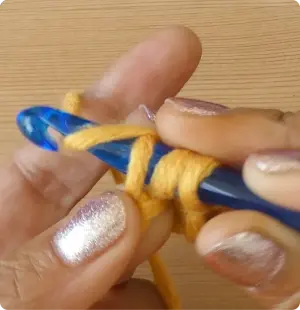
Yarn over,
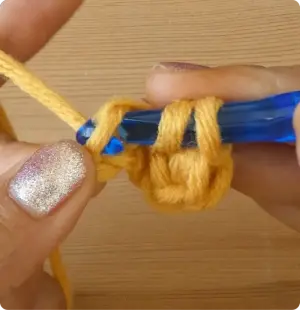
and pull the yarn back through the chain.
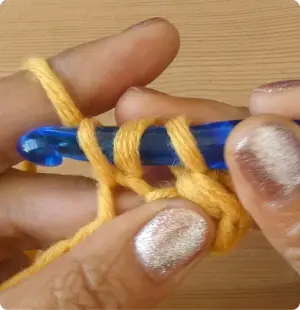
Pull the loop up,
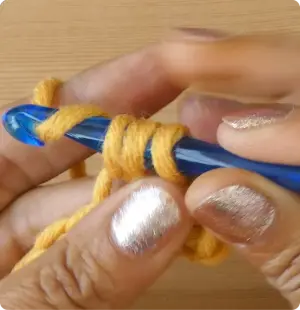
Yarn over again.
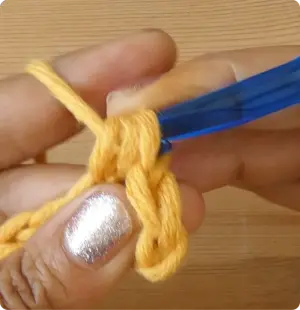
Pull the yarn through all 3 loops on the hook to close the stitch.
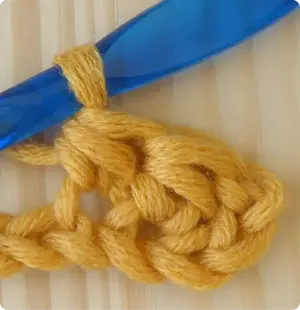
One loop left on the hook – 2nd Htr (Hdc) stitch finished (but 3rd of the row)!
Carry on making a Htr (Hdc) stitch in each chain.
So with the 1st of our 4 methods to crochet the half treble (half double) stitch, the count should be 9 stitches plus the chain to make a total of 10 Htr (Hdc).
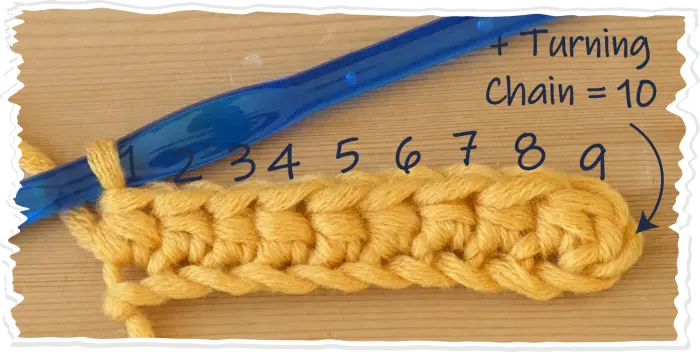
Turning chain counted as stitch, starts in 2nd stitch
For row 2, the starting stitch placement when counting the chain, is usually in the 2nd stitch, as the chain works as the 1st stitch.

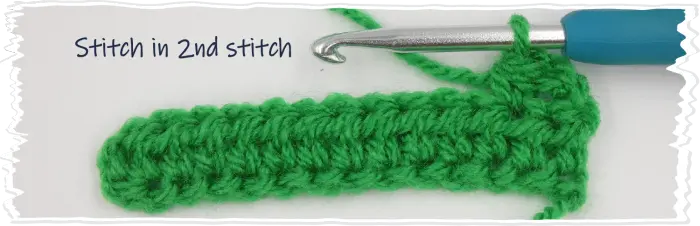
Start the row in the 2nd stitch of the row below.

The starting stitch becomes the 2nd stitch

The last stitch is worked into the turning chain.

Last stitch complete.
Repeat row 2 for any following rows.
Include the turning chain in the stitch count of your half treble (half double) stitches.
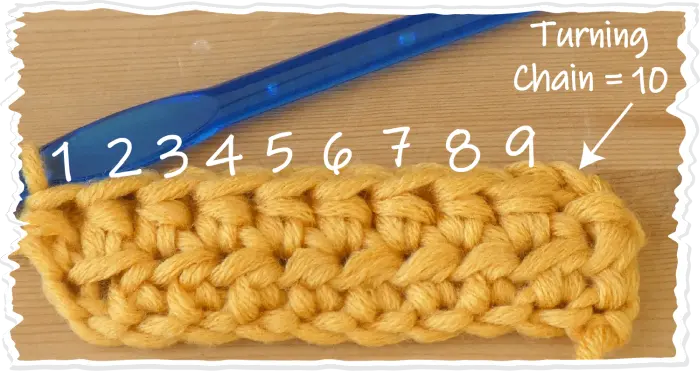

Before we continue to with the 4 methods of how to half treble (half double) crochet, I’d like to cement method 1 in your mind first. It’s the most common method I see in crochet patterns.
Follow this easy crochet Htr (Hdc) tutorial with written, photo and chart instructions. Or, If you want to watch a live demo, the video tutorial covers the swatch.
There will also be a practice swatch for method 4.
I covered the contents of a pattern in lesson 2, so I’ll jump straight into the pattern.
You can open and download the pattern in your browser or use the button below to download directly.

The notes let us know this patten contains 2 swatches and there are seperate skill/size tables.
The Chain 1 swatch measures 4.5 inches in height and nearly 9 inches in width. The gauge is 3 rows and 4 stitches per inch.
We’ll need a 4mm hook and acrylic yarn.
This is the Chain 1 Htr (Hdc) practice swatch. There are 14 stitches and 14 rows.
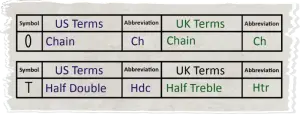
These are the chart symbols and abbreviations in both UK and US terminology.
I’ll be using UK terminology for this tutourial, US terminolgy will be in brackets.
Step 1 – Both the written and photo instructions state chain 15 and make a Htr(Hdc) in the third chain from the hook.
This tells us that there is a turning chain of 2, and there should be 14 stitches.
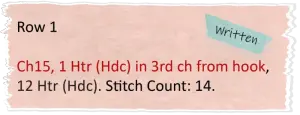
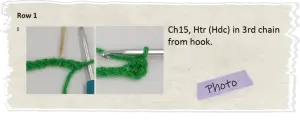
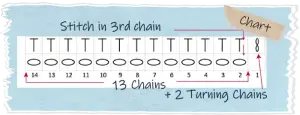
This is how it looks in practise
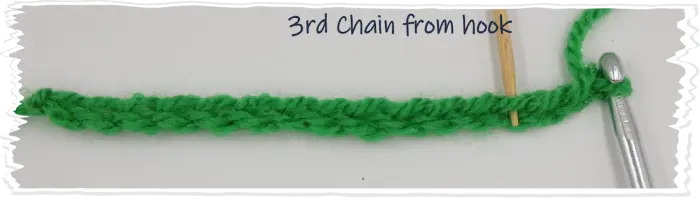
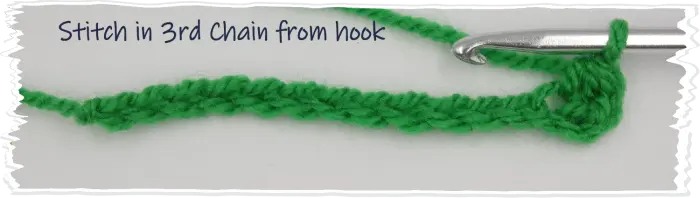
Step 2 – The next part of row 1 instructs us to work 12 Htr(Hdc), so we work 1 stitch in each of the remaining chains. This gives us a stitch total of 14.
The chart is read from the right.


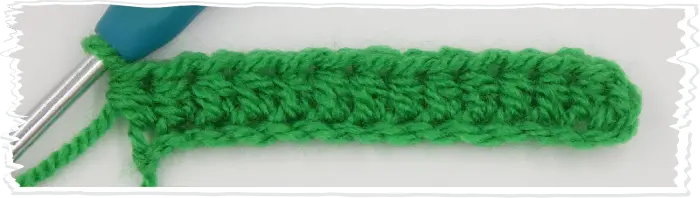
The completed row.
Step 1 – Chain 2 and turn your work. As the turning chain is the 1st stitch, the 2nd Htr(Hdc) is worked into the 2nd stitch of the row below.
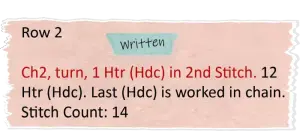
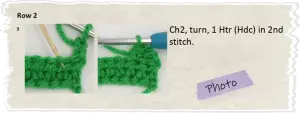
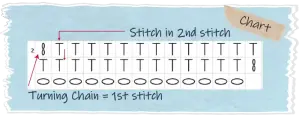
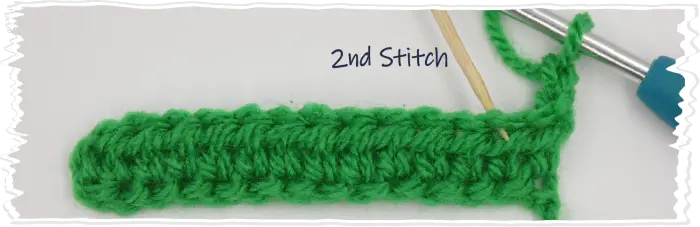
Step 2 – We then continue to make 12 Htr(Hdc) for a total of 14 stitches. The last stitch is made in the turning chain.
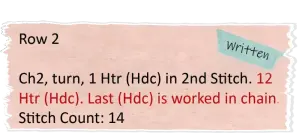
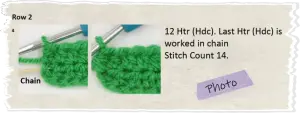
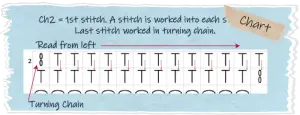
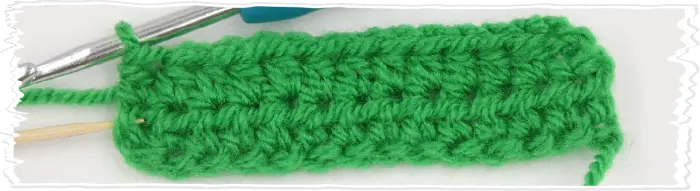
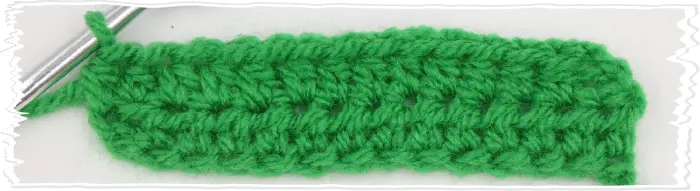
Simply repeat row 2 for 12 rows The stitch count should be 14 each row.
Alternate the reading direction of the chart each row
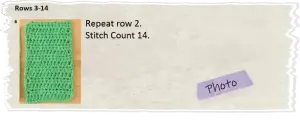
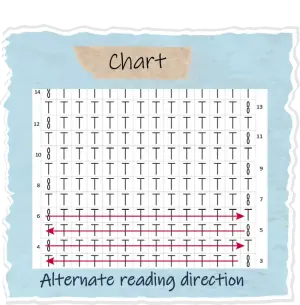
The finished swatch!
Remember to count your stitches at the end of each row.
I’ll be making 10 half trebles (half doubles) and have a turning chain of 2, so I’ll need 10 chains plus 2, making 12 chains in total.
The 1st stitch is worked into the 3rd chain from the hook. Chains 1 & 2 will become the turning chain.
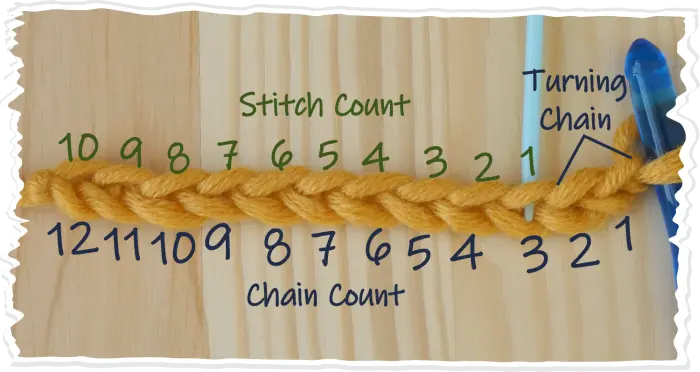
Turning chain not counted as a stitch
Row 1 starts the same as the previous methods.
Yarn over before going in the 3rd chain.
and pull the yarn back through the chain.
Yarn over again.
Pull the yarn through all 3 loops on the hook.
The turning chain isn’t the 1st stitch
Remember not to include the turning chain in the stitch count
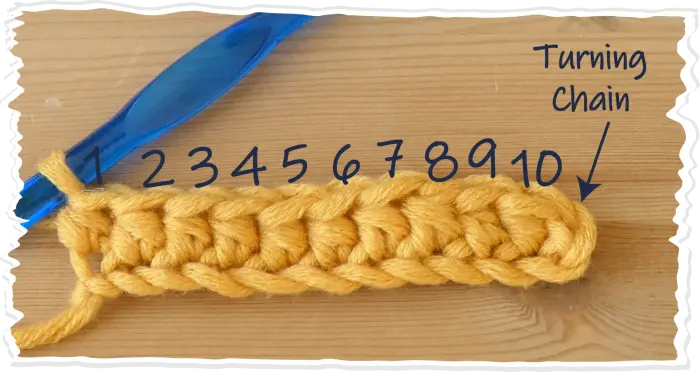
Turning chain not counted as a stitch, starts in 2nd stitch
Chain 2 and flip the row. The stitches are worked exactly the same as row 1 – remember to yarn over before you go in the stitch, and pull through all 3 loops to close the stitch.
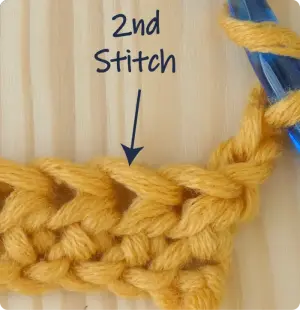
The row starts in the 2nd stitch of the row below.
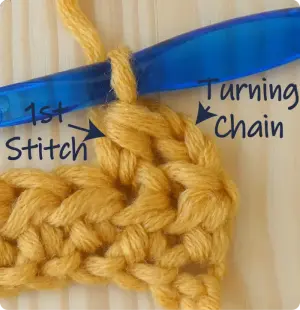
This is the 1st stitch of the row.
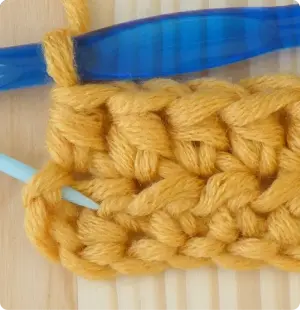
The last stitch is worked into the turning chain.
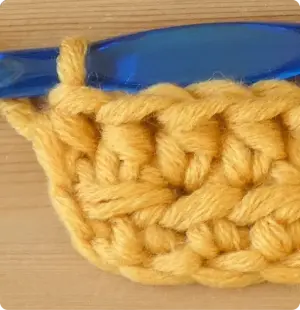
Last stitch complete.
Following rows are made the same as row 2.
Check again that there are 10 half treble (half double) stitches, not including the turning chain of 2.
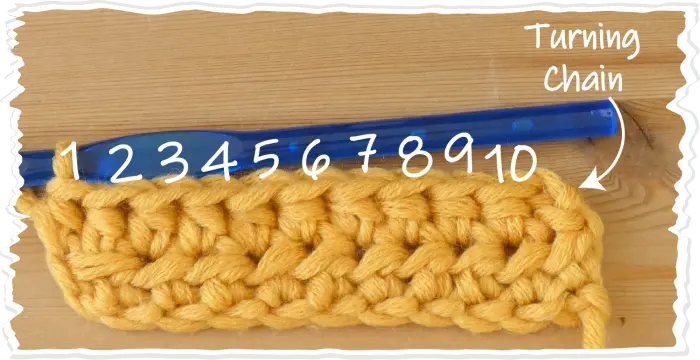
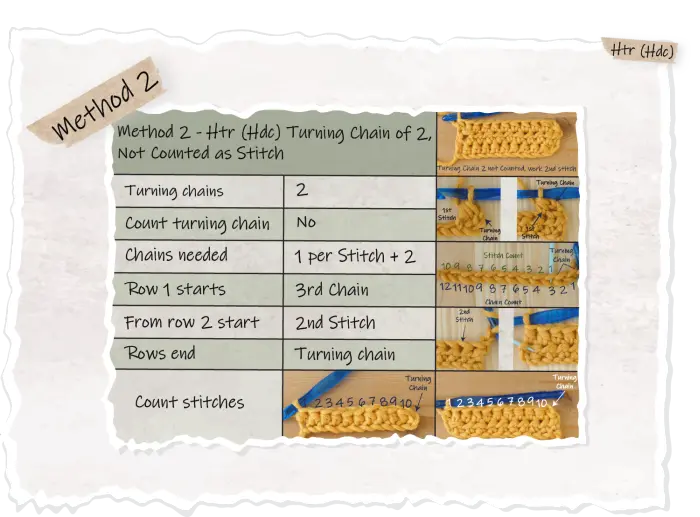
I’ll be making 10 half trebles (half doubles) and have a turning chain of 2, so like method 1, I’ll need 12 chains in total.
The 1st stitch is worked into the 3rd chain from the hook. Chains 1 & 2 will become the turning chain.
Turning chain not counted as a stitch
This method starts row 1 the same as method 1.
Yarn over before going in the chain 3rd from the hook.
Pull the yarn back through the chain.
Yarn over again.
Pull the yarn through all 3 loops on the hook to close the stitch.
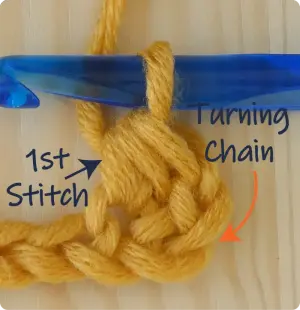
The turning chain isn’t the 1st stitch
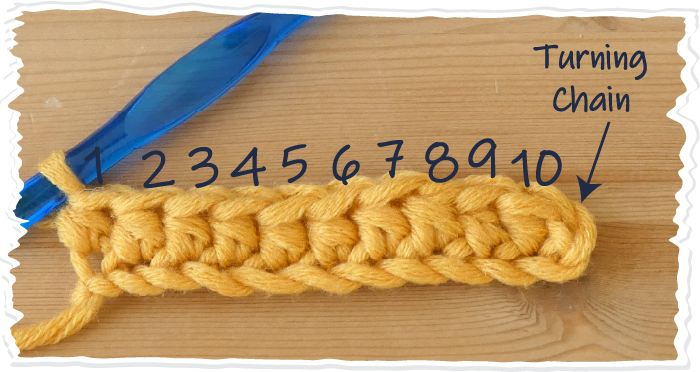
The stitches are counted the same as method 1 – the turning chain isn’t included in the stitch count.
Turning chain not counted as a stitch, starts in 1st stitch
The starting stitch placement on row 2, is the difference between methods 1 and 2. For these Htr (Hdc) rows, start in the 1st stitch.
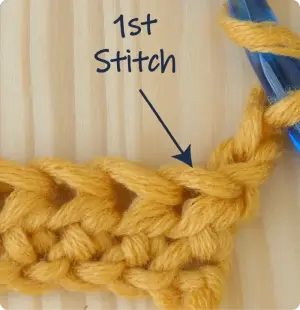
The row starts in the 1st stitch of the row below.
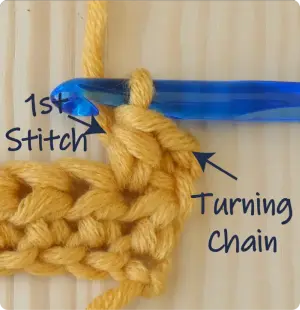
The 1st Htr (Hdc) of this row.
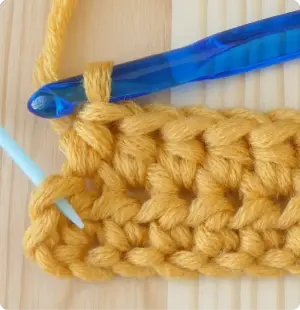
The last stitch is worked into the turning chain.
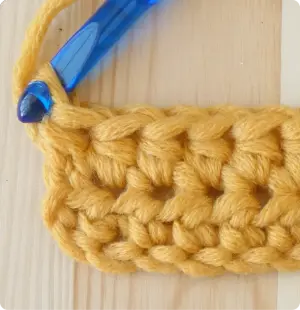
Last stitch complete.
Row 2 is repeated for any following rows.
Once again, don’t include the turning chain in the stitch count for the 2nd method of making an Htr (Hdc).
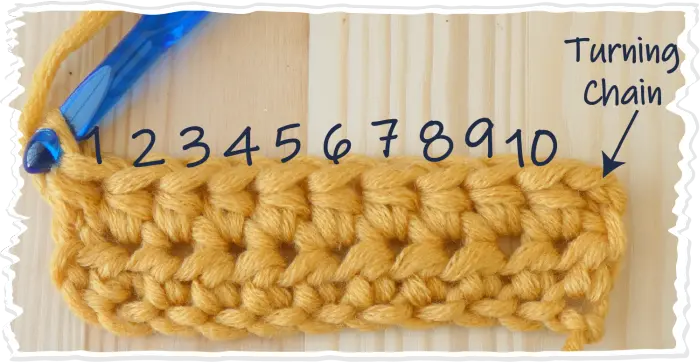
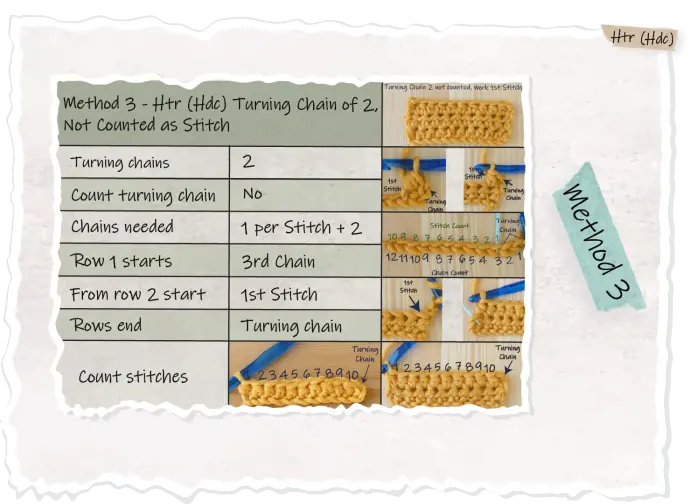
A turning chain of 1 is usually not counted as a stitch.
I’ll be making 10 stitches and have a turning chain of 1, so I’ll need 11 chains in total.
Chain 1 will be the turning chain. The 1st stitch is worked into the 2nd chain from the hook.
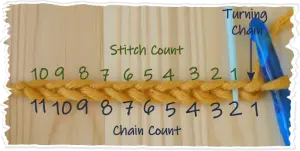
Turning chain not counted as a stitch
The Htr (Hdc) stitch is still crocheted the same as before.
Yarn over and start in the 2nd chain.
Yarn over again.
Pull the yarn through all 3 loops on the hook.
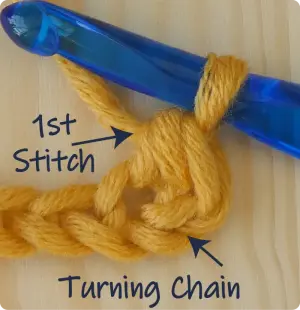
The turning chain isn’t the 1st stitch
The turning chain isn’t included in the stitch count
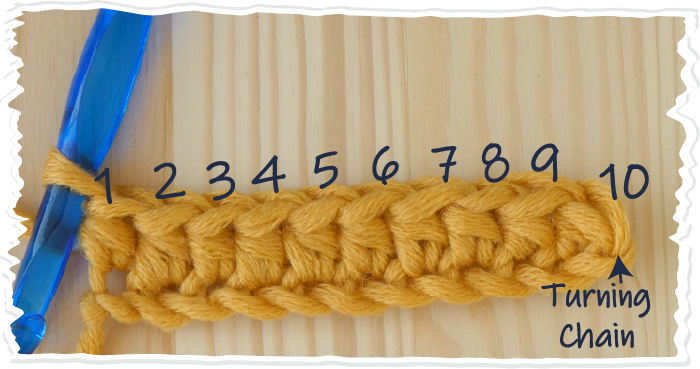
Turning chain not counted as a stitch, start in stitch 2.
Chain 1 and turn your work.
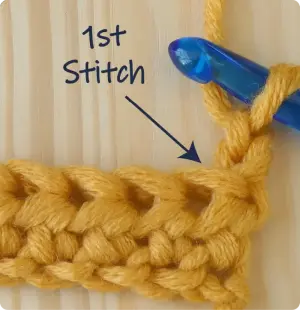
The row starts in the 2nd stitch of the row below.
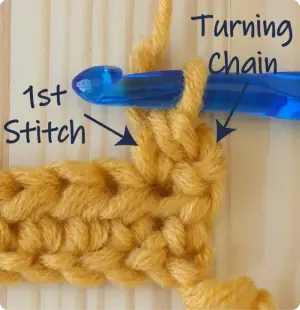
The 1st stitch of the row.
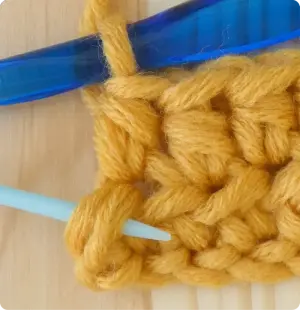
The last stitch is worked into the stitch.
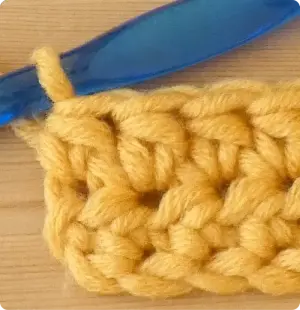
Last stitch complete.
Repeat row 2 for any following rows.
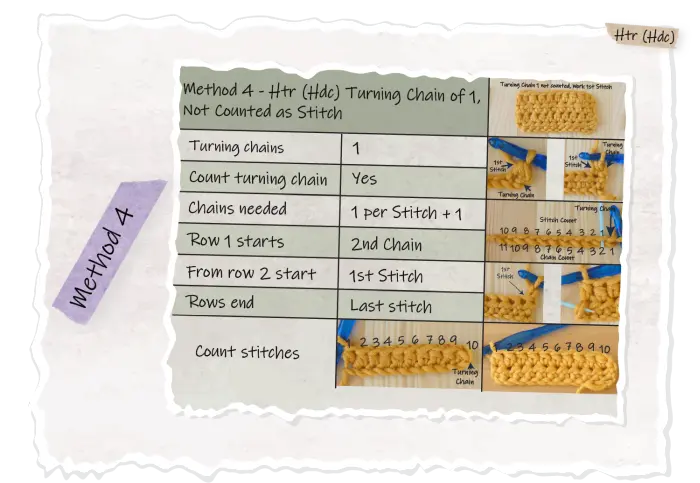
I’ve covered four variations of the half treble. Hopefully any patterns you use will clarify which option they use!
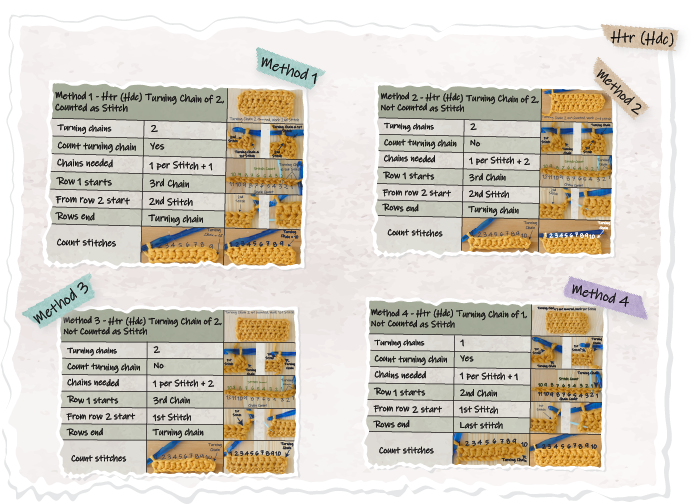
They all produce slightly different results, I prefer chaining 2 and working in the 1st stitch. Which do you prefer? Let me know in the comments!
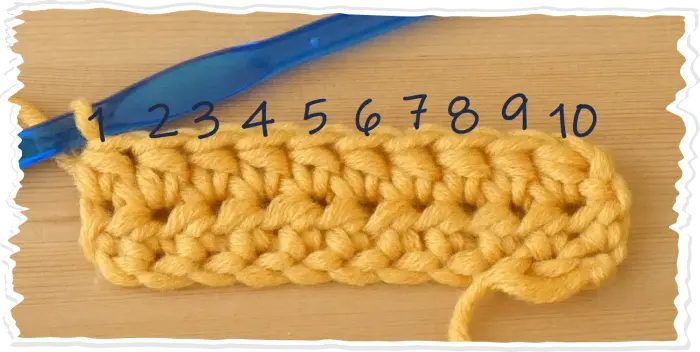
Step 1 – Both the written and photo instructions state chain 15 and make a Htr(Hdc) in the second chain from the hook.
This tells us that there is a turning chain of one, and there should be 14 stitches.
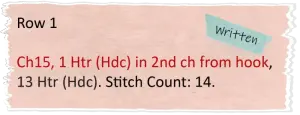
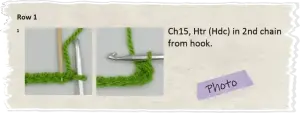
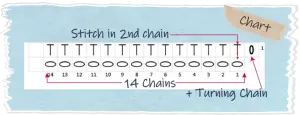
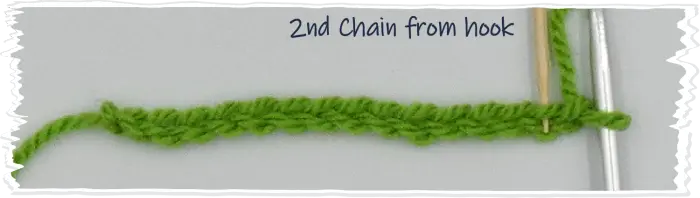

This is how it looks in practise
Step 2 – The next part of row 1 instructs us to work 13 Htr(Hdc), so we work 1 stitch in each of the remaining chains. This gives us a stitch total of 14.
The chart is read from the right.
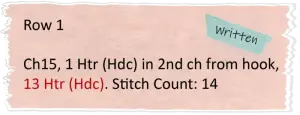
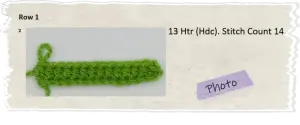
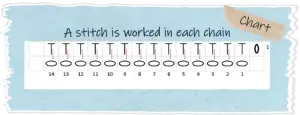
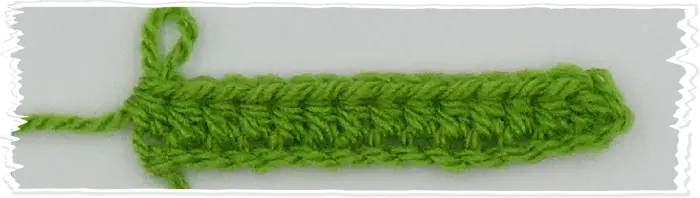
The completed row.
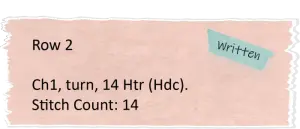
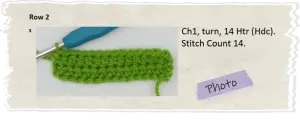
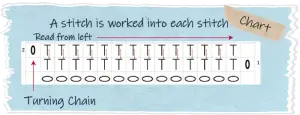
For row 2, we make 1 turning chain, flip the row like a book, and work 1 Htr(Hdc) in each stitch. The stitch count should be 14.
The chart is read from the left.
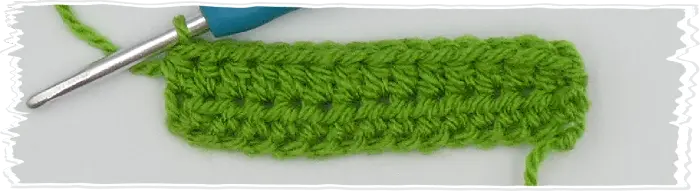
Simply repeat row 2 for 12 rows The stitch count should be 14 each row.
Alternate the reading direction of the chart each row.
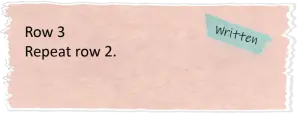
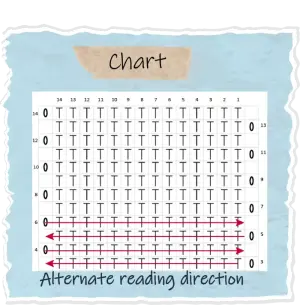
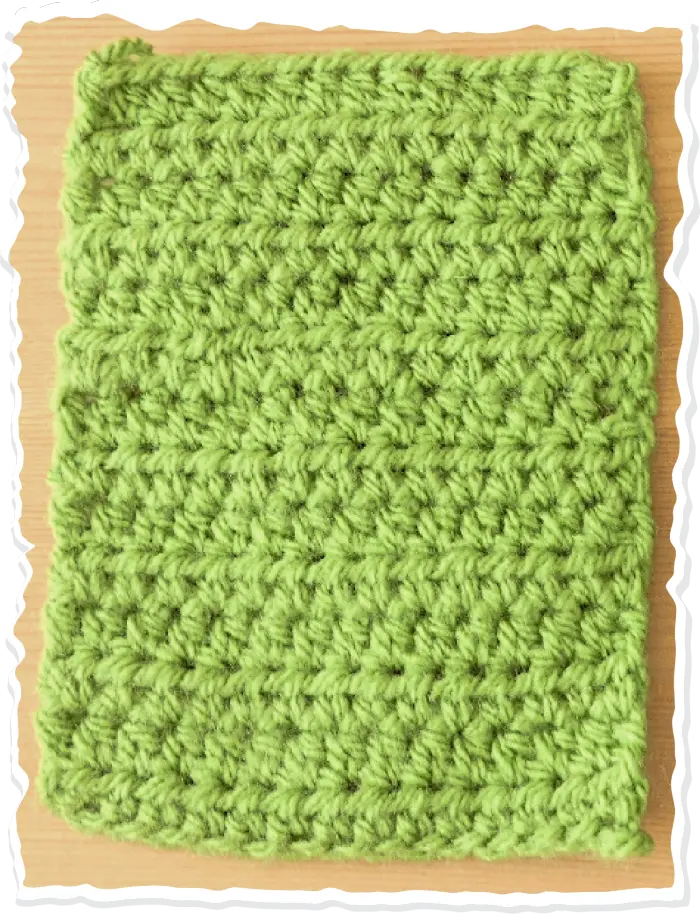
The finished swatch!
Remember to count your stitches at the end of each row.
So now you know 4 methods to crochet the half treble (half double stitch)! Hope you enjoyed this tutorial as much as I enjoyed making it 🙂
Before you move on to Lesson 5, make sure your Htr (hdc) stitches are consistent. I know it’s exciting to learn the next stitch, but good habits now are easier to gain now, than fixing bad habits later!
I’ll see you when your ready to learn the treble (double) crochet stitch!

Welcome!
My name’s Katie and I’m a crochet addict!
I learnt to crochet about 20 years ago whilst living in Ireland. I soon had a street stall selling my crochet hats and bags, eventually progressing to organising craft fairs.
I returned to street selling for a few years to fund my travels around Latin America, before settling down and becoming a mum to two cool kids.
I love working with colour and creating vibrant, detailed crochet and wanted to translate that into patterns.
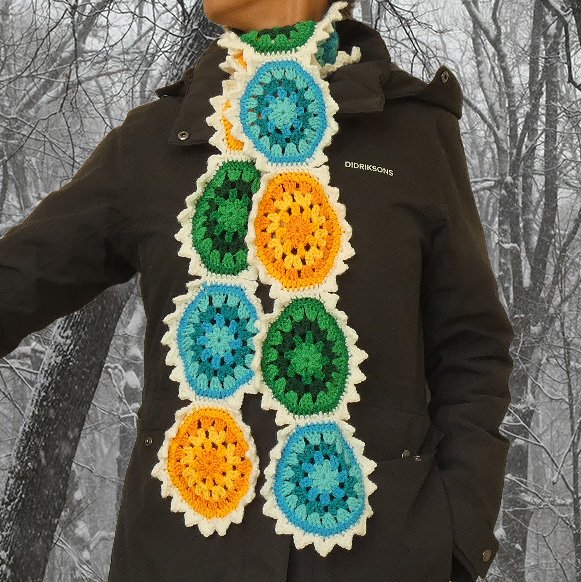
Free Crochet Scarf Pattern – Wagon Wheel
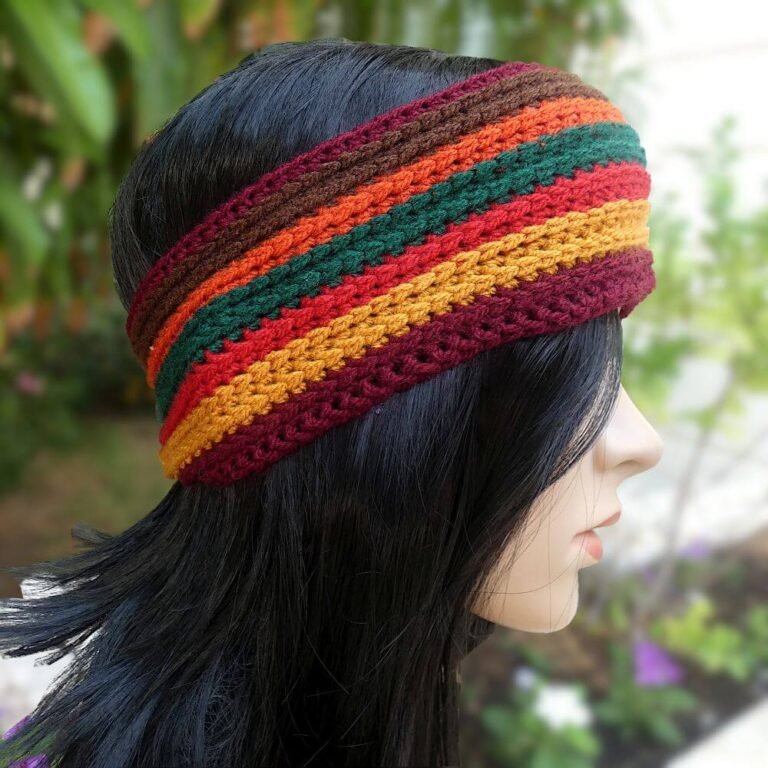
Crochet Ear Warmer Pattern
Crochet Short Scarf Pattern
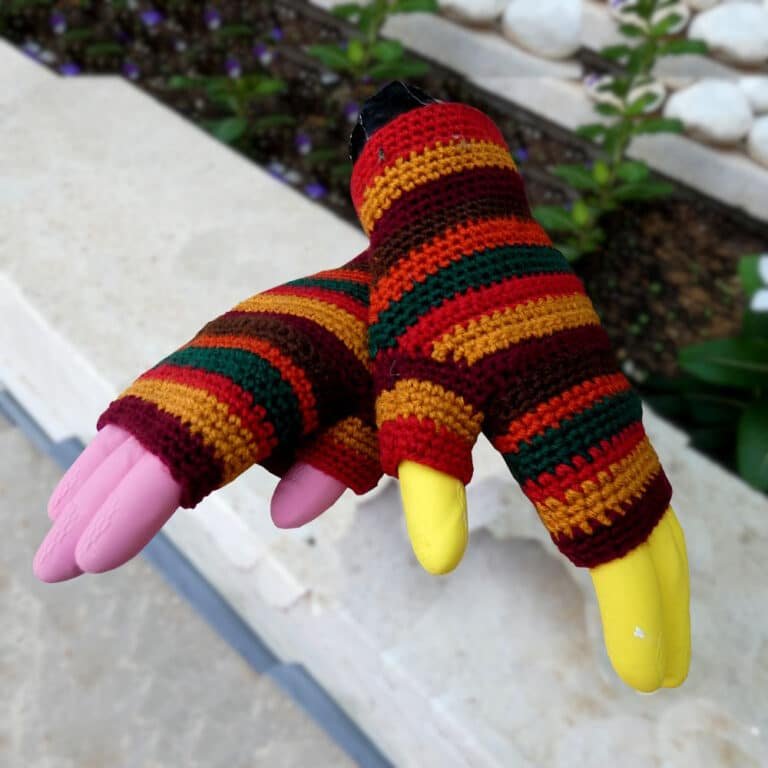
Crochet Fingerless Gloves Pattern