Secure Payments
10% Discount on 3+ Patterns
Secure Payments
Your card information will not be stored on our servers
10% Discount on 3+ Patterns
Buy 3 or more patterns for a 10% discount
Immediate Download
Immediate & unlimited downloads
Your card information will not be stored on our servers
Buy 3 or more patterns for a 10% discount
Immediate & unlimited downloads
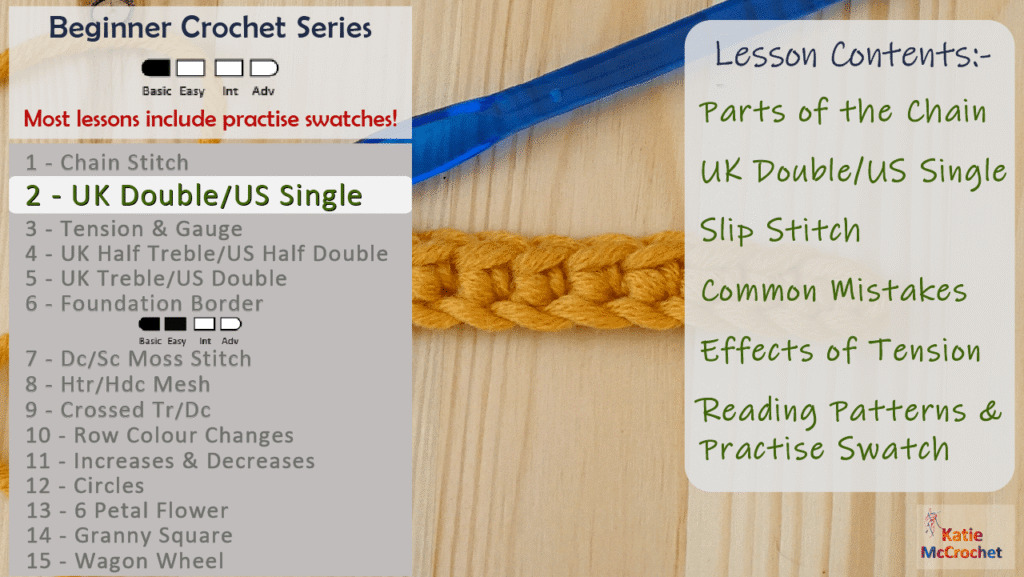
Welcome to Lesson 2 of the Beginner Crochet Series!
Today, you’ll learn the double (single) crochet stitch step by step, have the chain and crochet stitch anatomy explained and learn the slip stitch.
I’ll give you some crochet tips to avoid some of the common mistakes beginner crocheters make – and how to fix them!
We’ll have a quick look at crochet tension and how it can affect your work. I’ll go more in depth about tension in lesson three, so please be sure to watch it.
All this knowledge will be put to use when we cover the crochet pattern basics for beginners. You’ll learn how to read crochet patterns whilst making a beginner crochet practice swatch of double (single) crochet stitches.
the UK and the US have different crochet terminology. For eaxmple, the double crochet stitch in UK terms, is called a single crochet in US terms. I’ll be using UK terms with the US equivalent in brackets.
As discussed in lesson 1, chains are the base of crochet pieces, so let’s take a closer look before we begin.
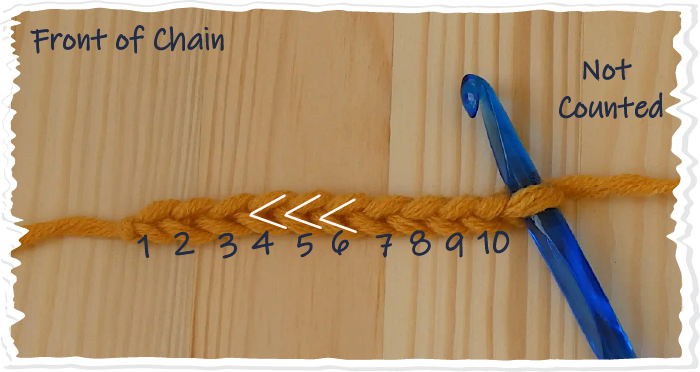
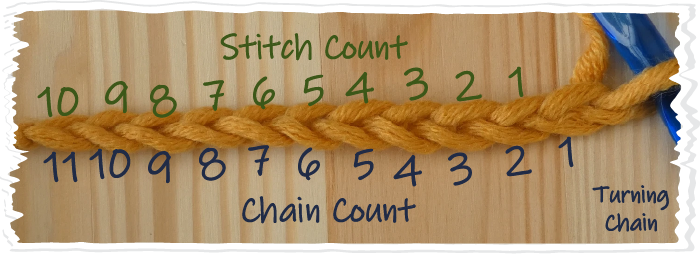
From the front, the chains look like V’s. To count crochet chains, simply count the V’s, however, the chain on the hook isn’t included.
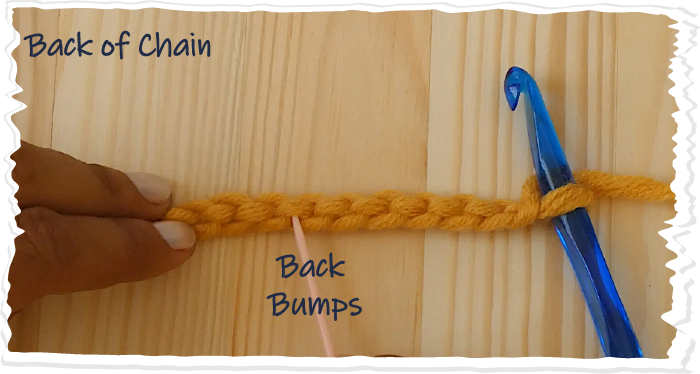
At the back, the chains form these back bumps.
Each chain will hold a stitch, which is worked into the front. Crochet rows start on the right and end on the left.
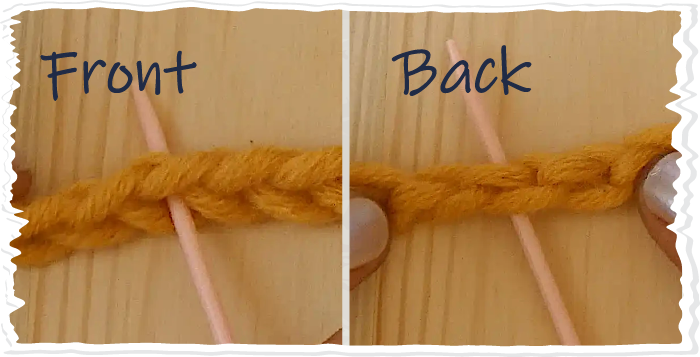
Stitches can be made into the bottom of the V shape. The hook would go under the bump, putting two strands over the hook.
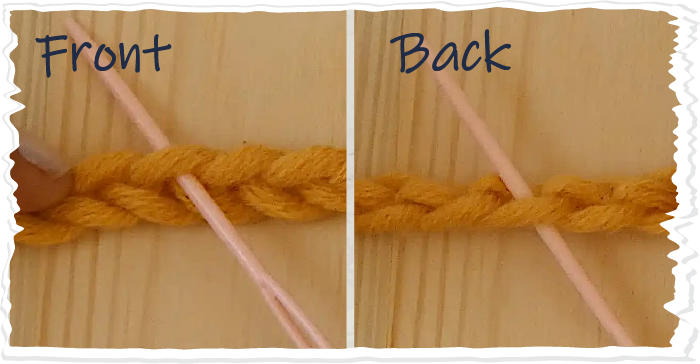
We can also work in the top of the V here, which puts one strand over the hook. I recommend working in this loop as it’s easier for beginners.
OK, so lets learn how to crochet the double (single) crochet stitch step by step!
The 1st row of crochet will have 10 stitches, so make 10 chains.
Add 1 more chain for the height of the stitch. This is known as the turning chain. So in total you should have 11 chains., not including the chain on the hook.
I cover making the chain in Lesson 1 if you need a refresher.
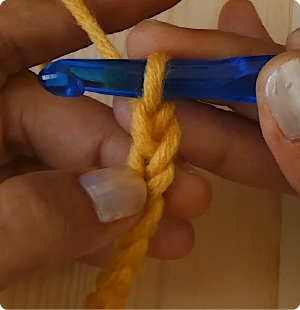
The 1st stitch is placed in the second chain.
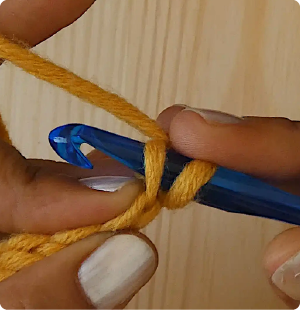
Go into the top of the V, so there’s one strand over the hook.
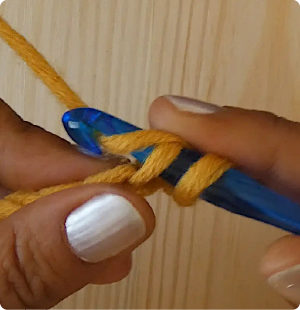
Bring the yarn over the hook. This action is called ‘yarn over’.
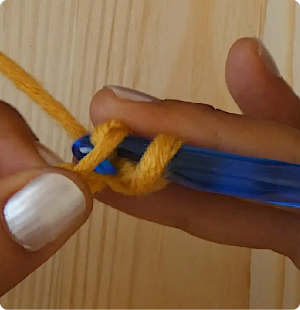
Pull the yarn back through the chain.
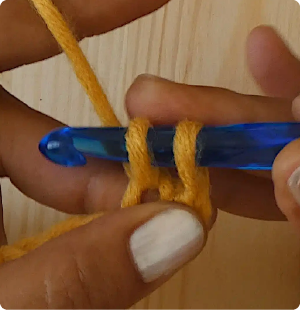
Pull the hook up. There are 2 loops on the hook. Make sure the loops are at the same height.
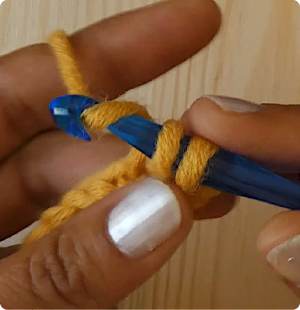
Yarn over again.
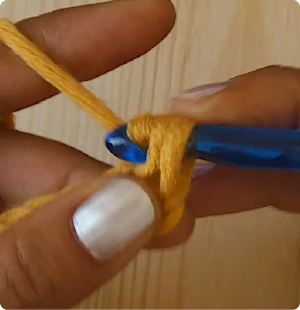
Hold the base of the chain, and pull the yarn through both loops on the hook.
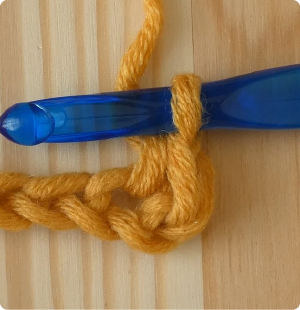
There’s 1 loop left on the hook and that’s your first stitch complete!
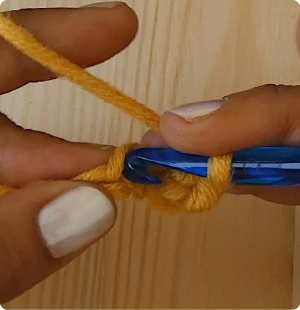
Push your hook into the top of the next chain.
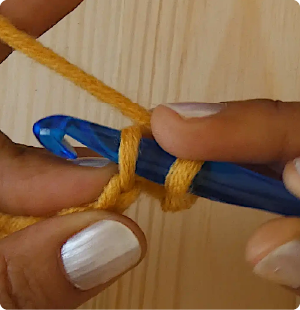
There’s one strand of the chain over the hook.
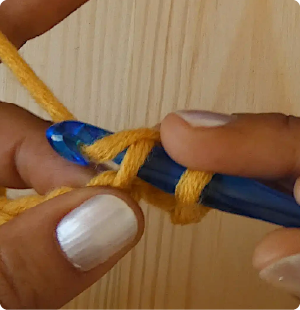
Yarn over,
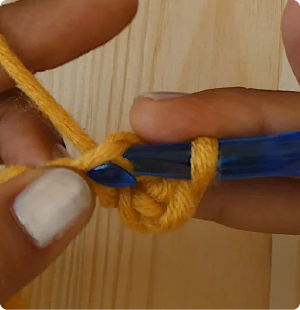
and pull the yarn back through the chain.
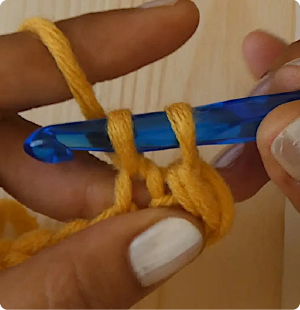
Pull the loop up,
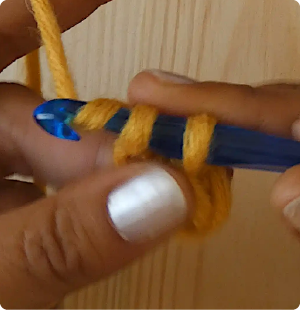
yarn over again,
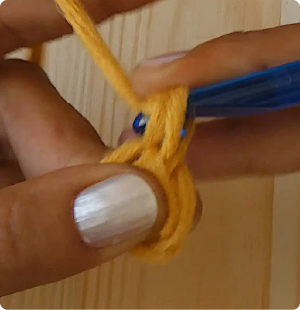
and pull through both loops.
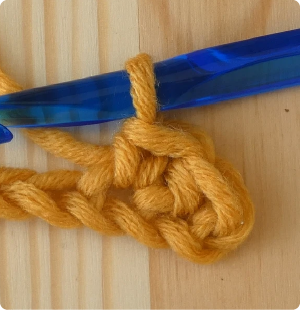
There’s 1 loop left on the hook and that’s your second stitch complete!
There’s 1 loop left on the hook and that’s your second stitch complete!
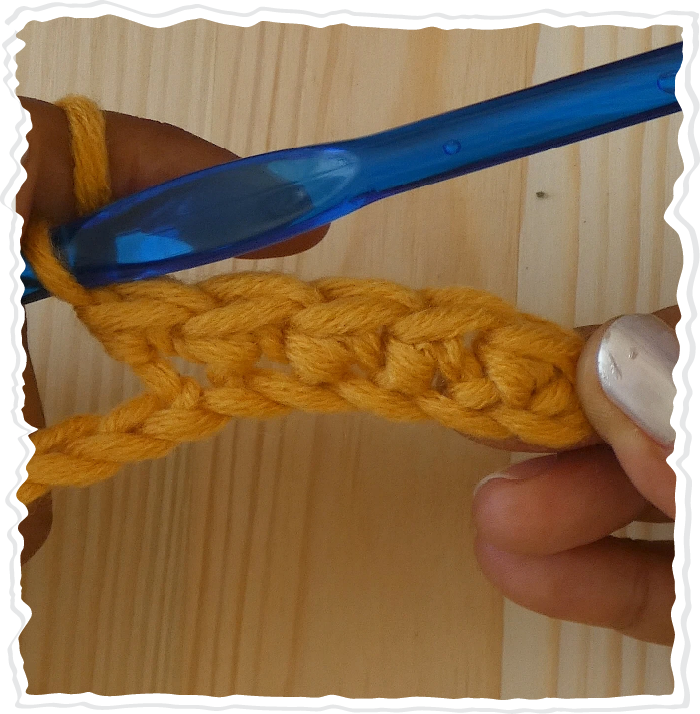
Carry on making double (single) crochet stitches in each chain.
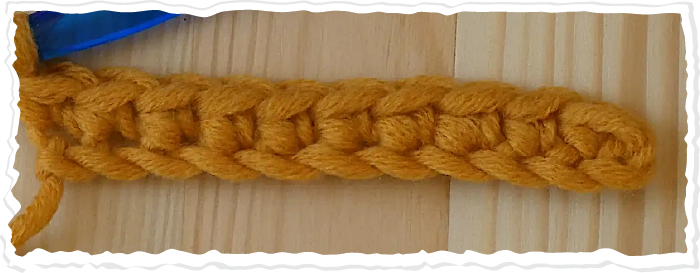
The stitches should be consistent in size, if not hopefully these tips will help!
Don’t be discouraged if it takes a few attempts, you will get there!
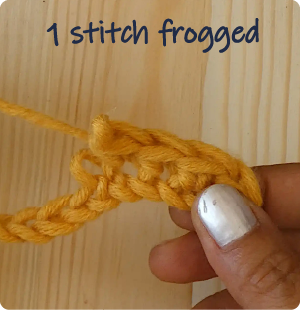
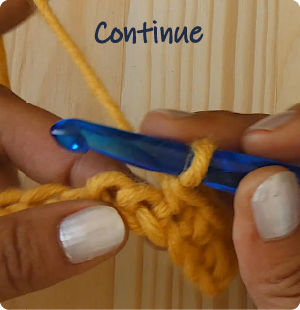
If you make a mistake in crochet, you can “frog” the stitches – simply pull the yarn to undo the stitch or stitches. Then place your hook back in the loop and start again. This will be a vital skill to master lol!
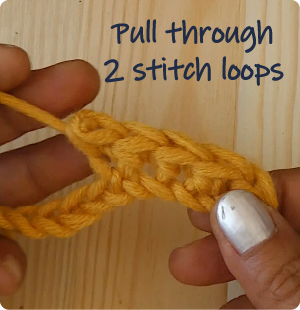
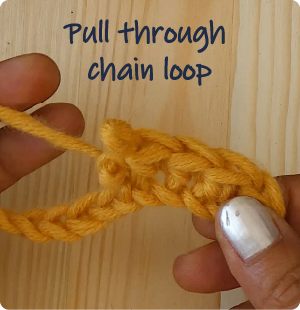
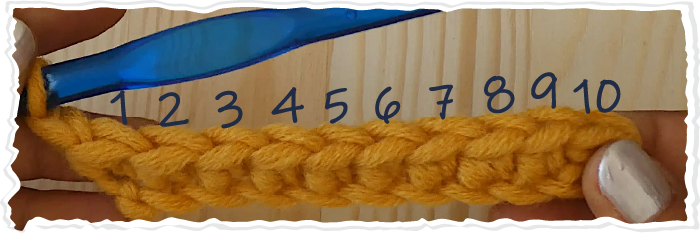
Count your stitches at the end of the row, to be sure there are 10. The top of the stitches look like V’s again.
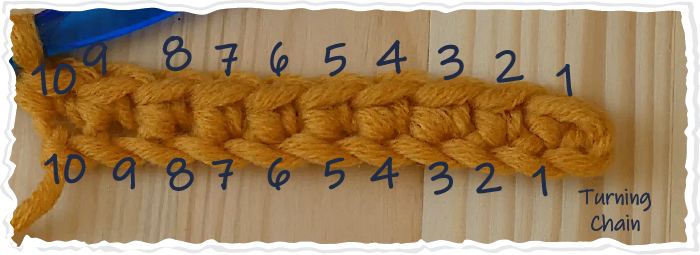
As you can see, the turning chain isn’t counted for this stitch, it’s purely to bring the end of the row level with the stitches.
Before we continue to row 2, let’s take a quick look at the parts of a crochet stitch. Stitches can be worked into various parts of the stitch below, so it’s important to understand the anatomy of a crochet stitch.
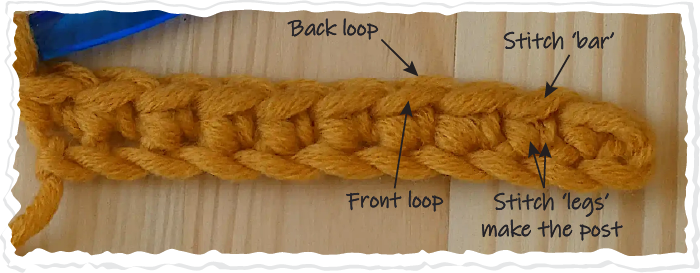
The 2 vertical strands of a stitch are called ‘legs’, together they make a ‘post’. Stitches worked here are ‘post stitches’.
The top of the stitch is the ‘bar’, and has 2 strands. The front strand is a ‘front loop’, the back a ‘back loop’. Crochet stitches can be worked in either of these loops.
The stitches are worked exactly the same as row 1, but now we work into stitches instead of a chain.
Regular crochet is always worked in the same direction, so we have to ‘turn’ our work, to place the hook at the start of the next row.
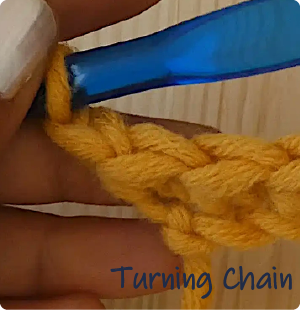
Chain 1 to turn your work.
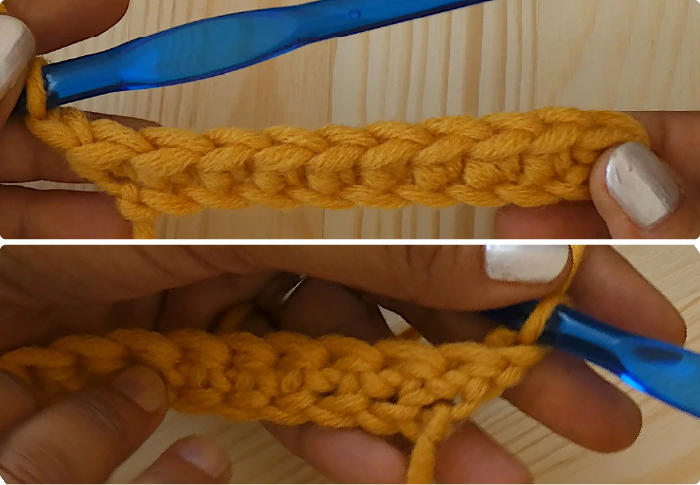
Hold the end of the row and flip it to the left, like turning the page of a book.
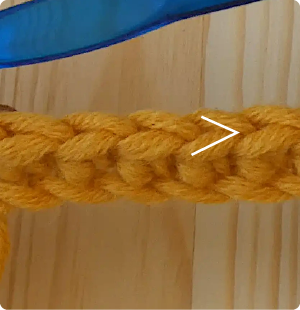
The top of the stitches form V’s.
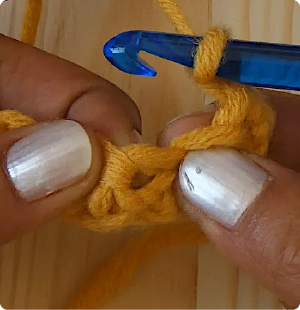
There are spaces between the stitches.
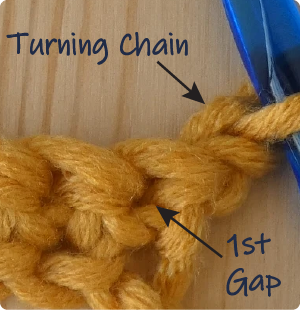
The first stitch goes in the first space. Make sure you don’t work into the turning chain!
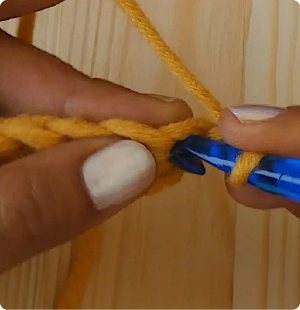
Push the hook into the first space.
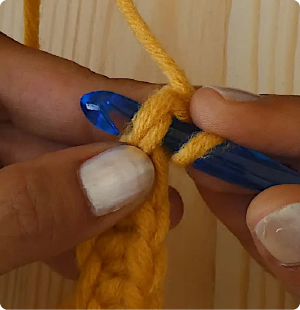
There are 2 strands of yarn from the stitch over the hook.
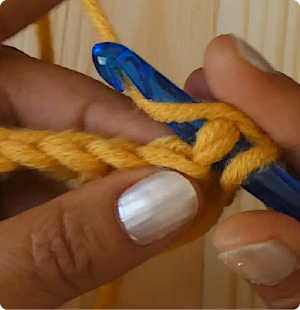
Yarn over,
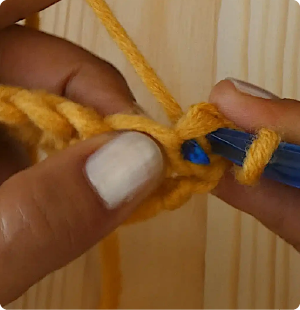
pull the yarn back through the stitch,
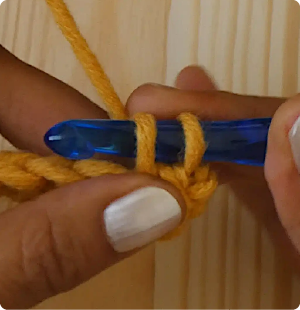
and level with the loop on the hook. There are 2 loops on the hook.
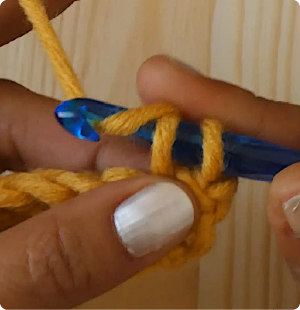
Yarn over again,
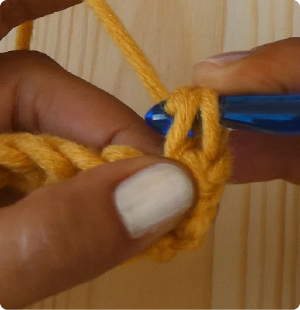
and pull through the 2 loops on the hook.
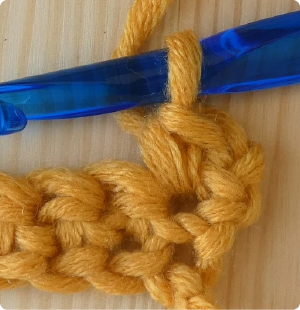
The 1st stitch is finished.
Continue working in each stitch along the row.
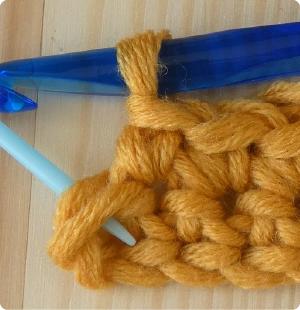
The last space looks a bit different. Make sure there are 2 strands over the hook.
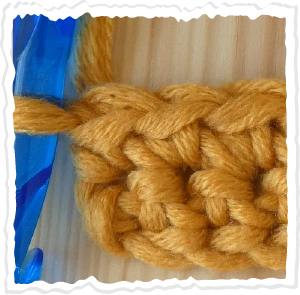
The finished last stitch.
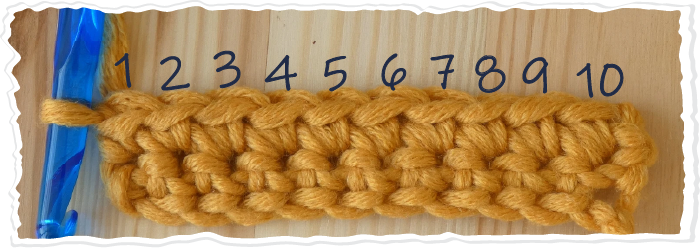
Remember to count your stitches!
Repeat row 2 for any following rows.
It’s as easy as that to learn the double (single) crochet stitch!
As with any learning any craft it’s easy to make mistakes – crochet is no different. Luckily, its just as easy to fix them!
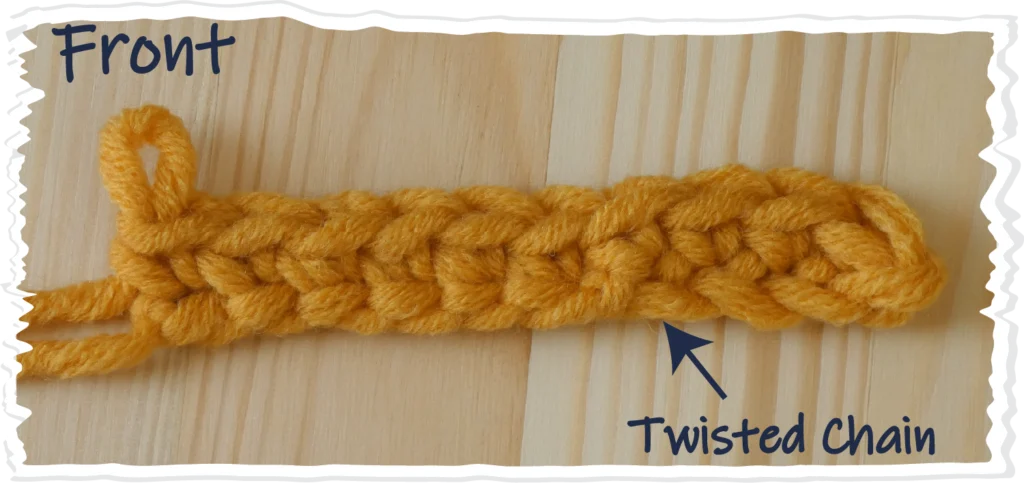
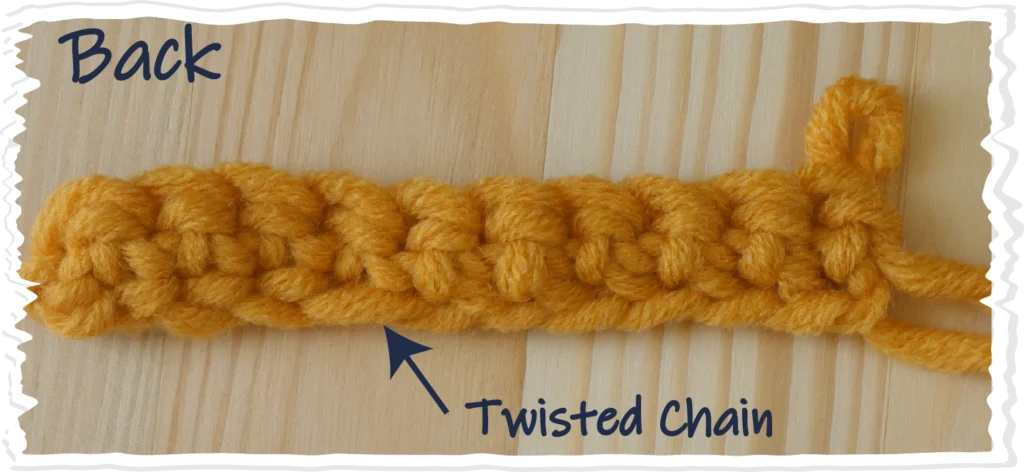
If a stitch is worked into the back of the chain it causes the chain to twist. This can be avoided by making sure to have the chain V’s facing you.
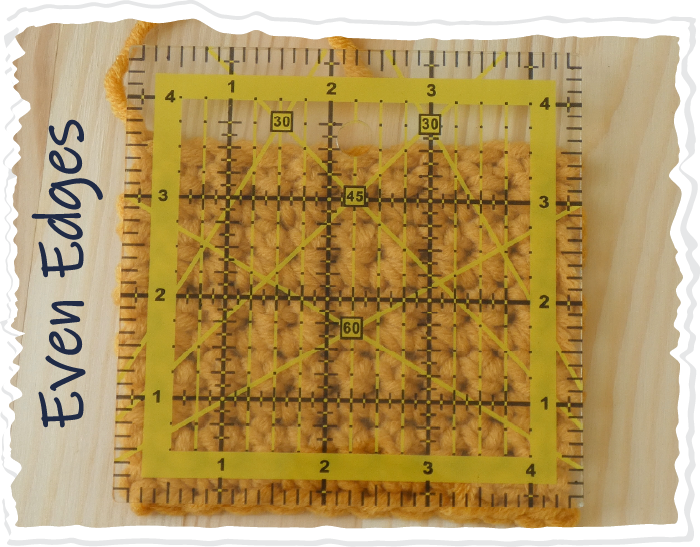
The edges of your work should be even.
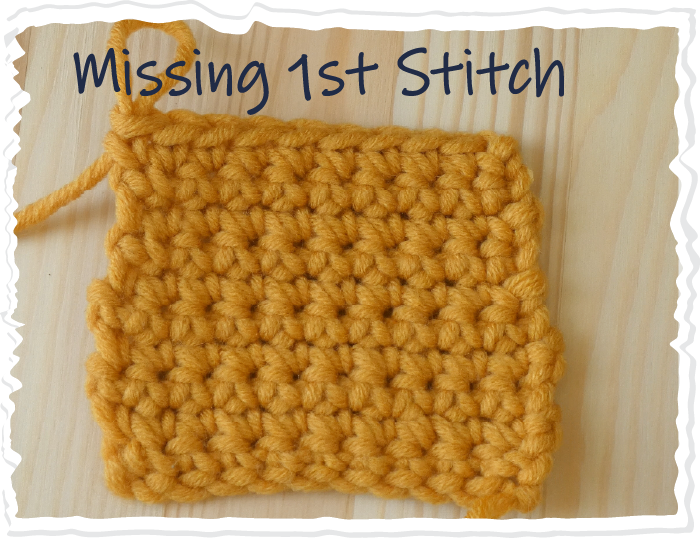
Missing the 1st stitch of the row can cause the edge to step in.
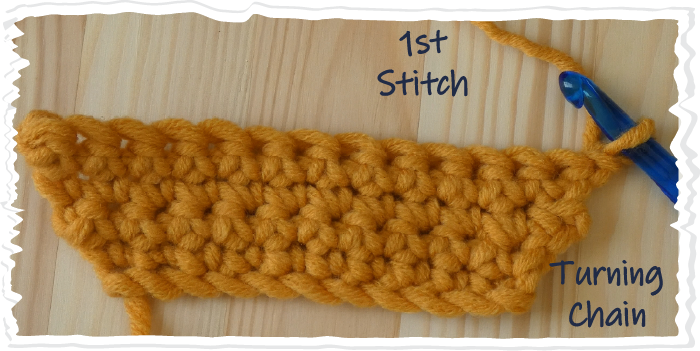
Working into the turning chain causes the edges to flare out.
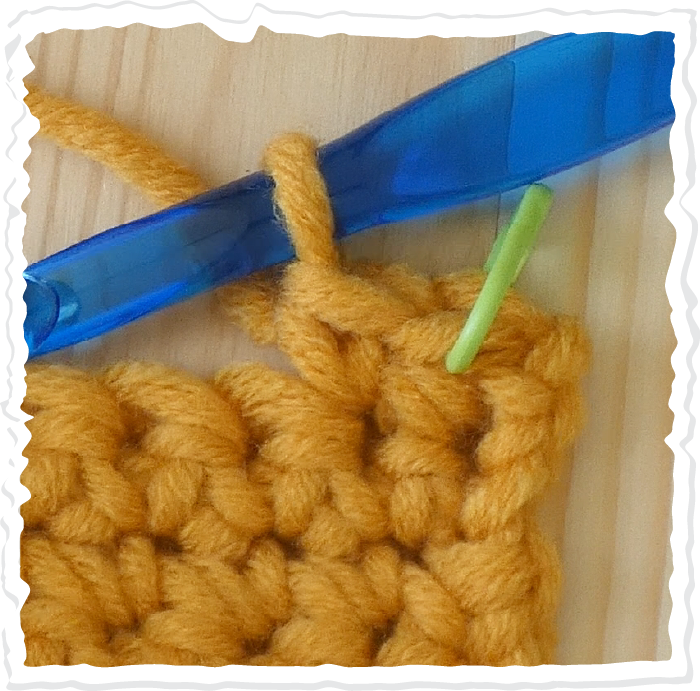
Placing a stitch marker in the first and last stitch will help to keep edges straight in crochet. pieces.
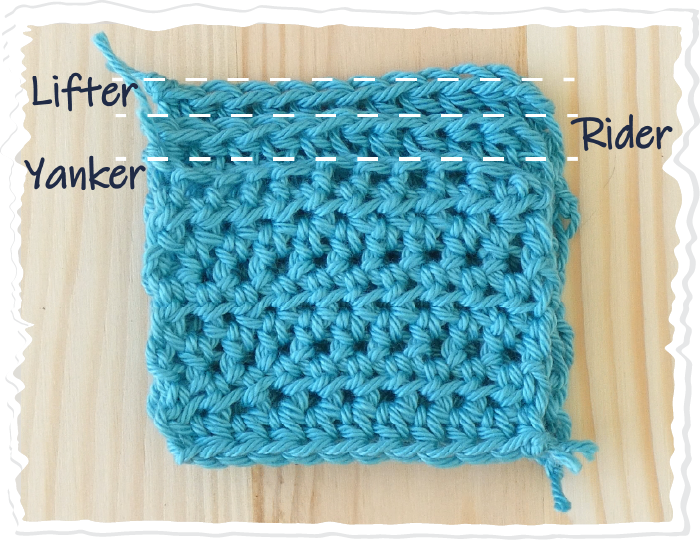
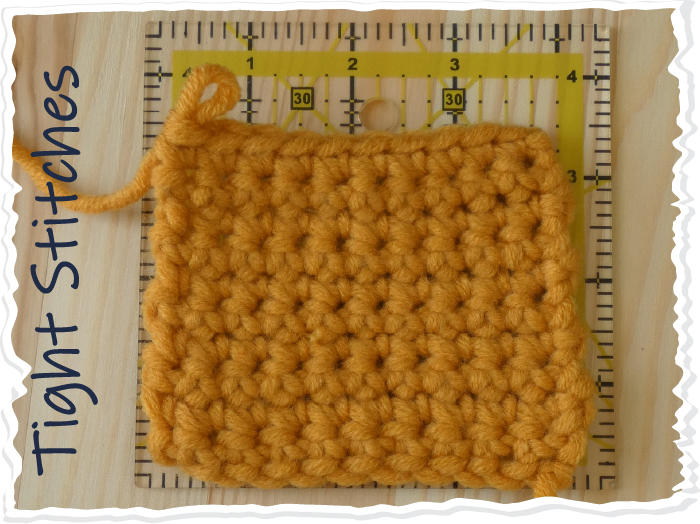
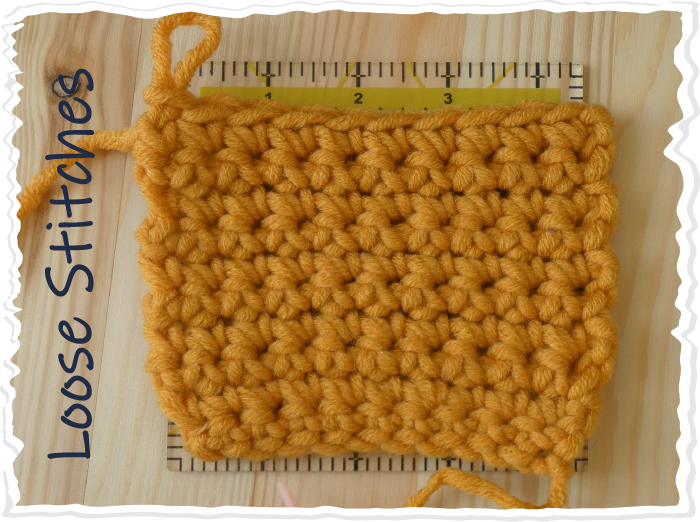
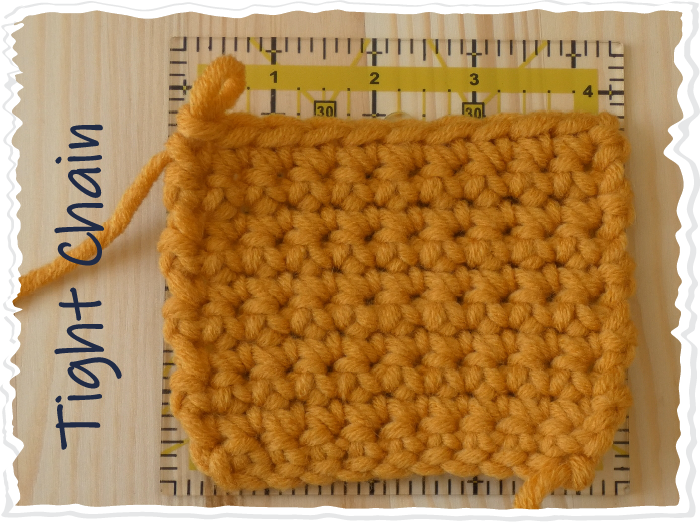
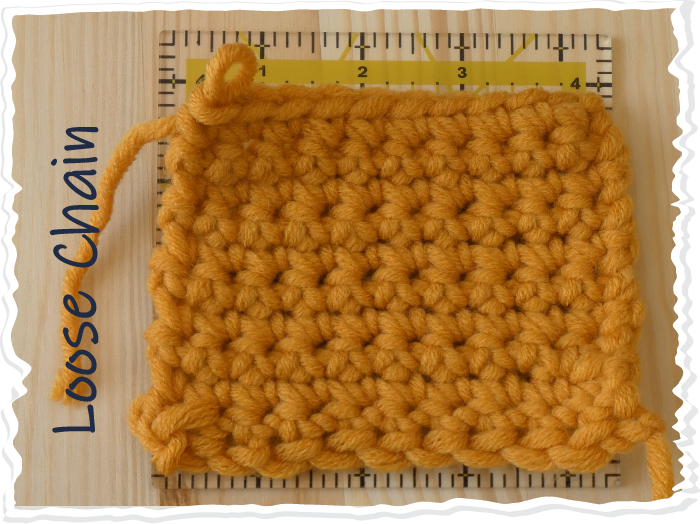
The term ‘tension’ is used in crochet to refer to how tight or loose crochet stitches. It’s used in patterns to ensure your piece is the same dimensions as the designer. The 3 pieces in the picture are all made with the same hook and yarn, but vary in size. The smallest piece has tight tension and the largest has loose tension
It’s important to develop good tension habits from the start to avoid your work looking like the examples below.
I go more in depth about crochet tension & gauge in the next lesson.
Now to make sure all your crochet doesn’t unravel!
This process is known as ‘weaving the ends in’ – some people enjoy this part, others detest it!
You’ll need your darning needle and scissors now.
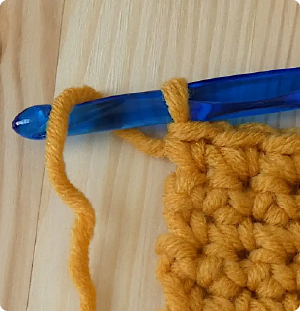
Yarn over,
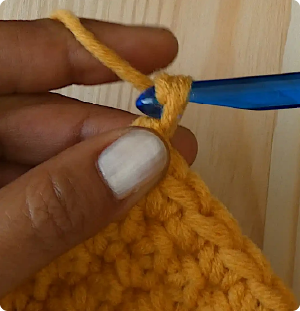
and pull the hook through the loop.
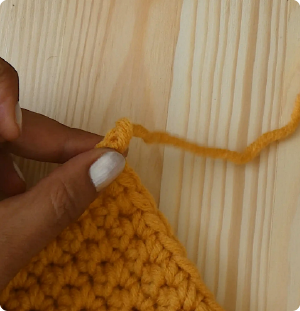
Pull the yarn through completely to make a knot.
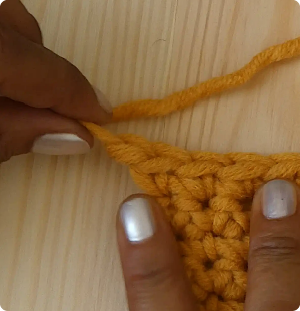
Gently pull on the yarn end to tighten the knot.
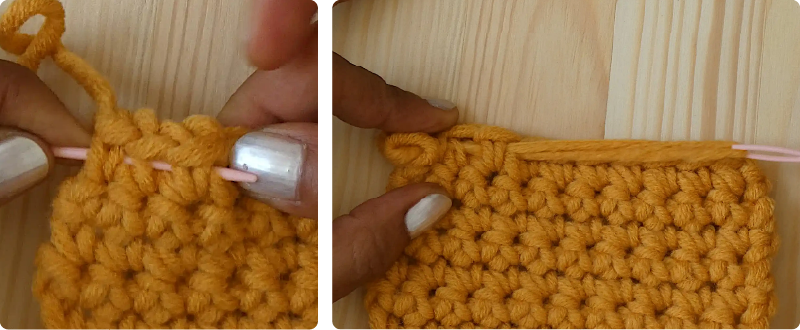
Thread the yarn end through a darning needle and pass it through the fibres of at least 3 stitches.
Pull all the way through the stitches.
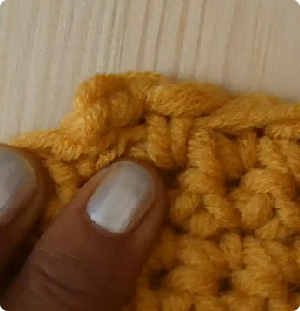
Pulling the yarn end too tight, will cause the corner to curl in.
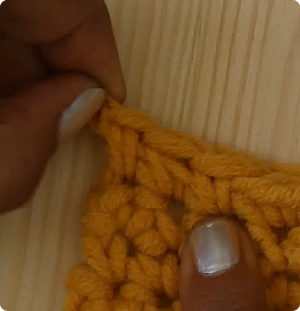
Just loosen it a little if this happens.
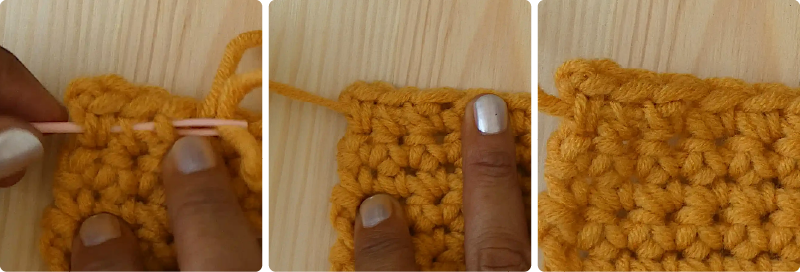
Go back the other way, going through different stitch fibres to the 1st pass through.
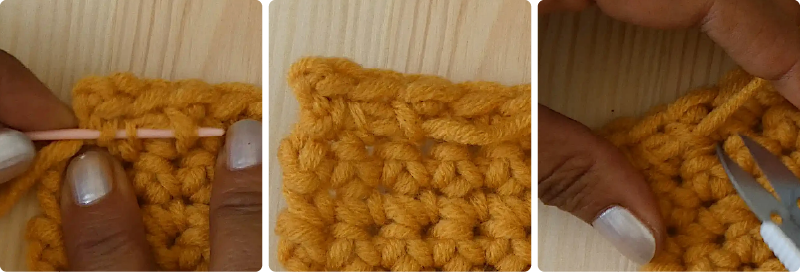
Make a third pass through the stitches, just to be sure! Snip the yarn close to the stitches.
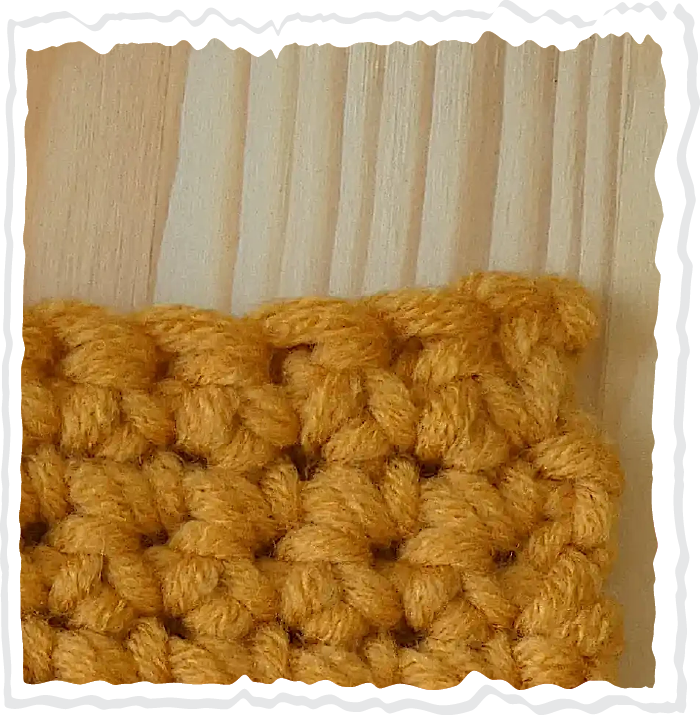
And that’s how to finish crochet work! It’s important to always leave enough yarn at the beginning and end, to weave in.
You’ve learnt the double crochet (single) crochet stitch, hopefully, you now have a nice crochet swatch of double (single) crochet!
Next, let’s learn the parts of a crochet stitch.
You can probably see a difference in the alternating rows. This is because crochet stitches have a front and a back.
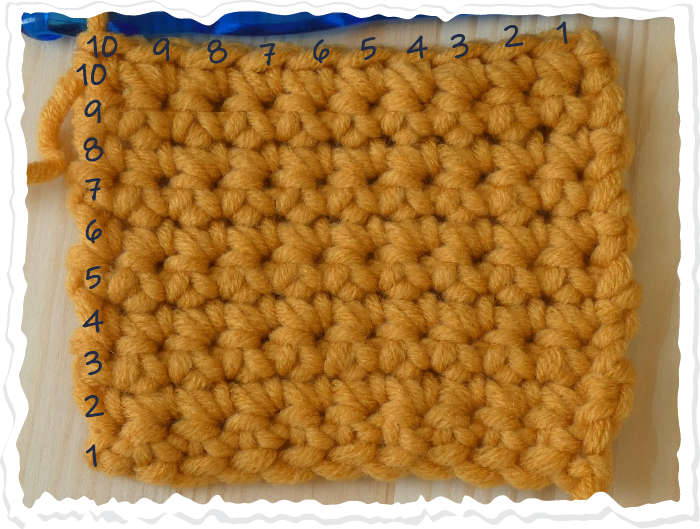
This swatch has 10 rows and 10 stitches. The odd number rows are the back of the stitches, the even number rows are the front.
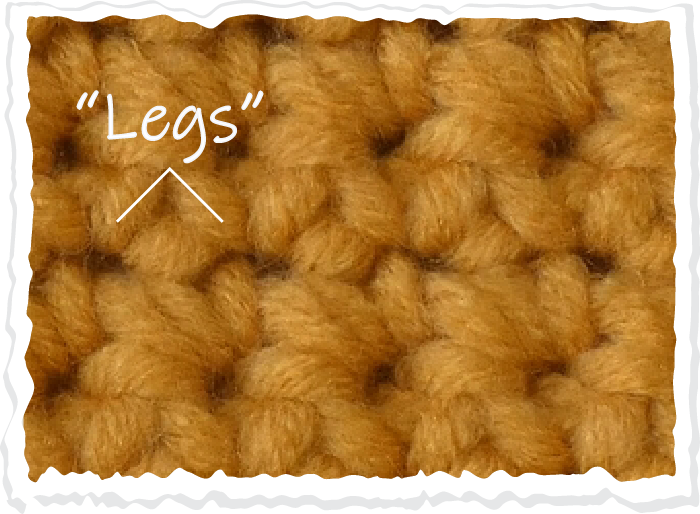
The back of the stitches have “legs” that look like upside down V’s.
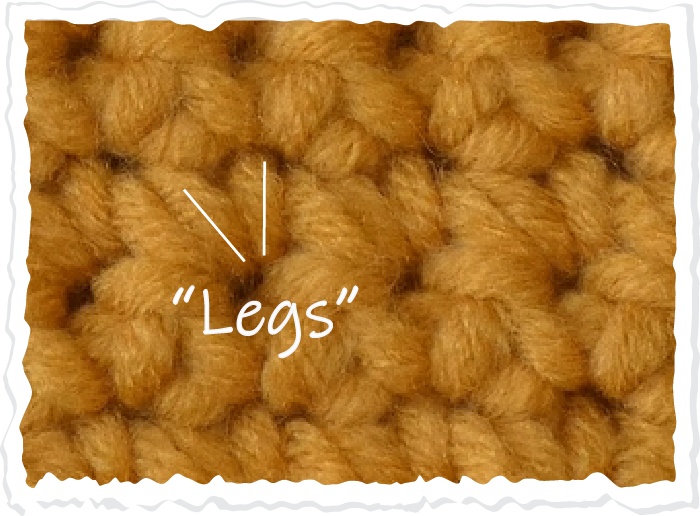
At the front the “legs” are together. This part of the stitch is the “post”.
Slipstitches are the smallest of all stitches. They are used throughout crochet to join rounds or create decorative stitches.
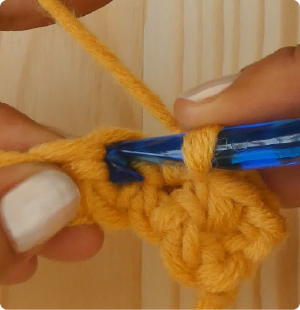
Push the hook into the stitch.
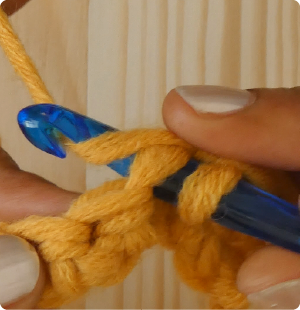
Yarn over,
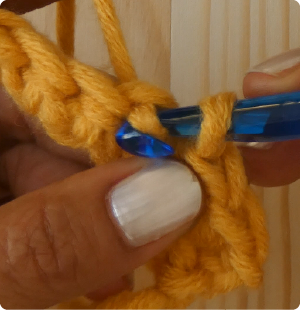
Pull the yarn back through the stitch,
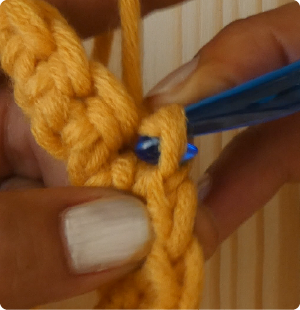
and straight through the loop on the hook.
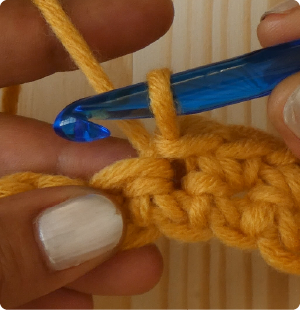
The finished slipstitch.
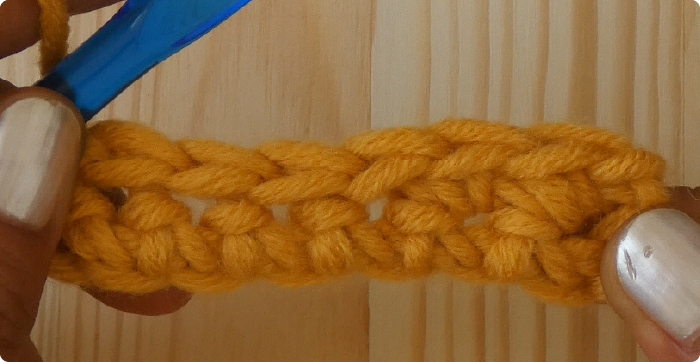
Slipstitches do not have any height.
Push the hook into the stitch.
Yarn over,
Pull the yarn back through the stitch,
and straight through the loop on the hook.
The finished slipstitch.
Slipstitches do not have any height.
Learning to read crochet patterns opens up a whole new creative world. Crochet instructions may look like another language – that’s because it is! It’s the language of crochet! But don’t worry this beginner friendly crochet pattern reading guide has got you covered!
You’ll learn how to follow crochet patterns, and gain an understanding of crochet stitch abbreviations and chart symbols.
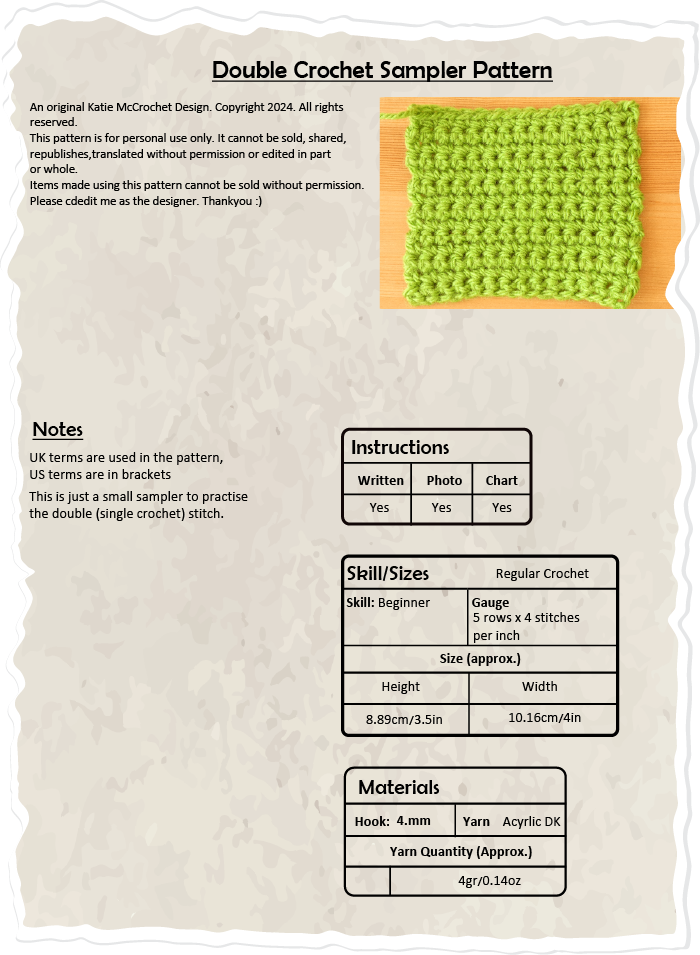
Crochet patterns will have a page with all the necessary information on it, like which materials you need and the gauge.
If there is a notes section, it’s important to read it as it often contains need to know information.
The pattern calls for a 4mm hook and uses an acrylic double knit yarn. It will use about 4g of yarn.
The swatch is nearly 3.5 inches in height and 4 inches in width. The gauge is 5 rows by 4 stitches per inch as you can see here. We’ll talk more about gauge in the next lesson.
There should also be a stitch and abbreviation page to make sure you understand which stitches to use and the abbreviations used in the pattern.
Some designers will include both UK and US terms in their pattern. I’ll be using UK terms for this tutorial, but I’ll make a note of the US terms too.
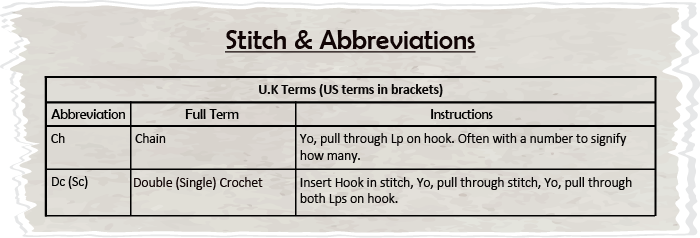
Crochet patterns can include written, photo and chart instructions or any combination of these instruction types.
At 1st glance, written crochet patterns can look a little intimidating, but learning to read crochet patterns is actually pretty simple!
Written and photo crochet patterns are separated into rows.
Stitch names are given abbreviations e.g double crochet is written as Dc. There should be a stitch key with the terms.
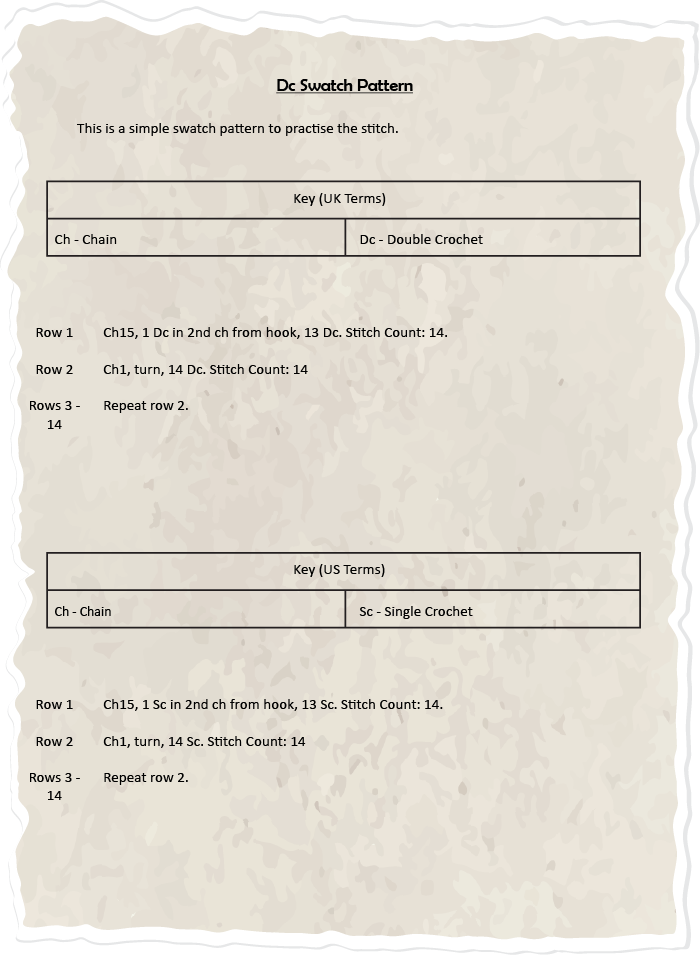
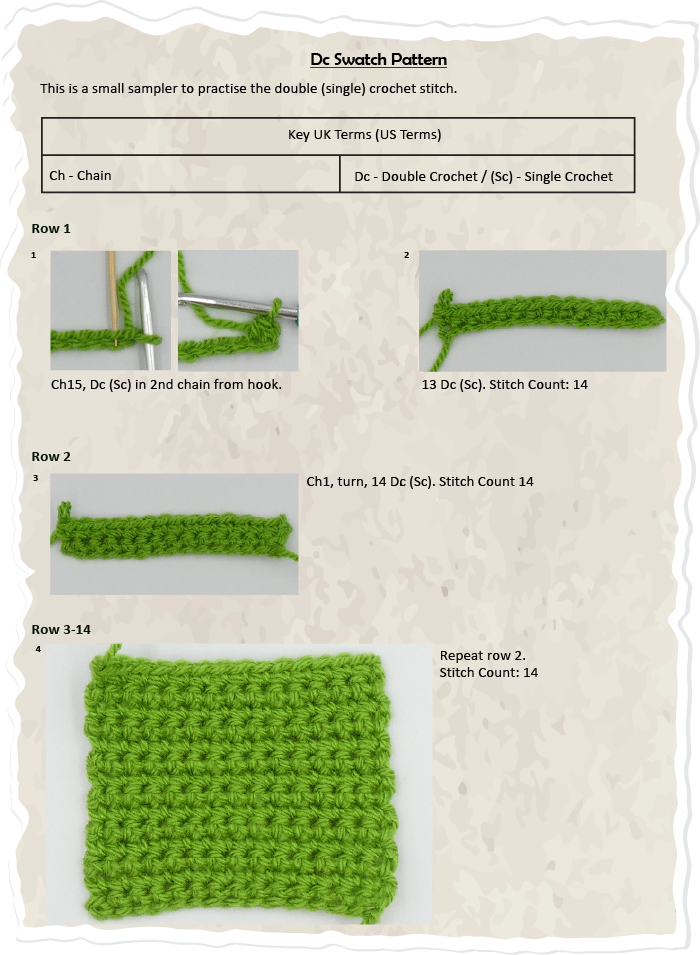
As mentioned before, the UK and US use different terminology for crochet stitches. It’s vital to know which term your pattern uses. The easiest way to tell if your crochet pattern is written with UK or US terms, is to see if stitches are called ‘single (Sc)’ or ‘half double (Hdc)’. These are purely US terms, however, ‘double (Dc)’ and ‘treble (Sc) appear in both UK and US terms.
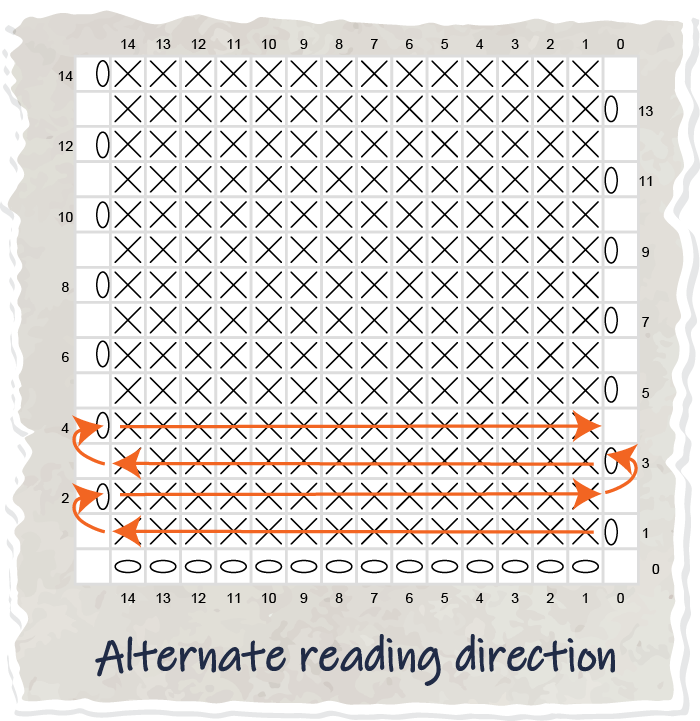
Crochet charts use symbols to represent a stitch. They are basically a diagram of your projects’ stitch placement.
A crochet chart will usually be the same shape as the item you’re making, so a circle would have a circular chart etc.
The chart should also include a key for the crochet symbols.
The UK and US uses pretty much the same symbols. The UK symbol for a Dc (Sc) is a t shape, but the X seems more common. The slipstitch symbol can either be a ~ or a dot.
The stitch count is the numbers at the top and bottom, and the side numbers are the row number.
The chart is read from right to left for the 1st row, then left to right for the 2nd row and so on as you move up the chart.
Crochet patterns will have a page with all the necessary information on it, like which materials you need and the gauge.
If there is a notes section, it’s important to read it as it often contains need to know information.
The pattern calls for a 4mm hook and uses an acrylic double knit yarn. It will use about 4g of yarn.
The swatch is nearly 3.5 inches in height and 4 inches in width. The gauge is 5 rows by 4 stitches per inch. We’ll talk more about gauge in the next lesson.
There should also be a stitch and abbreviation page to make sure you understand which stitches to use and the abbreviations used in the pattern.
Some designers will include both UK and US terms in their pattern. I’ll be using UK terms for this tutorial, but I’ll make a note of the US terms too.
Crochet patterns can include written, photo and chart instructions or any combination of these instruction types.
At 1st glance, written crochet patterns can look a little intimidating, but learning to read crochet patterns is actually pretty simple!
Written and photo crochet patterns are separated into rows.
Stitch names are given abbreviations e.g double crochet is written as Dc. There should be a stitch key with the terms.
As mentioned before, the UK and US use different terminology for crochet stitches. It’s vital to know which term your pattern uses. The easiest way to tell if your crochet pattern is written with UK or US terms, is to see if stitches are called ‘single (Sc)’ or ‘half double (Hdc)’. These are purely US terms, however, ‘double (Dc)’ and ‘treble (Sc) appear in both UK and US terms.
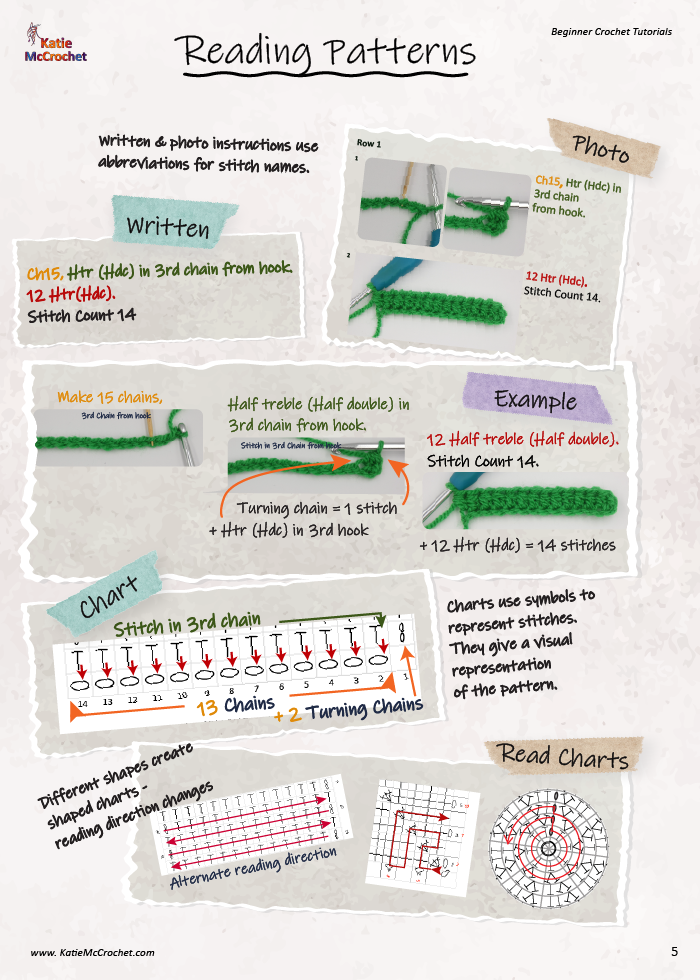
Crochet charts use symbols to represent a stitch. They are basically a diagram of your projects’ stitch placement.
A crochet chart will usually be the same shape as the item you’re making, so a circle would have a circular chart etc.
The chart should also include a key for the crochet symbols.
The UK and US uses pretty much the same symbols. The UK symbol for a Dc (Sc) is a t shape, but the X seems more common. The slipstitch symbol can either be a ~ or a dot.
The stitch count is the numbers at the top and bottom, and the side numbers are the row number.
The chart is read from right to left for the 1st row, then left to right for the 2nd row and so on as you move up the chart.


Although the written and photo instructions are the same, the photo is split into 2 parts.
How would you interpret these crochet instructions?
Written in full it would say –
Chain 15, make a half treble (half double) in the third chain from the hook. Make a further 12 half trebles (half doubles) for a stitch count of 14.
Learning how to read crochet patterns is fairly simple.
To dip your toes into crochet patterns, I’ll start with a very simple swatch of double (single) crochet stitches. These are single crochet stitches in US terminology.
I’ll show you written, photo and chart forms. If you want to watch a live demo, the video tutorial covers the swatch at around 12 minutes in.
You can download the pattern here.
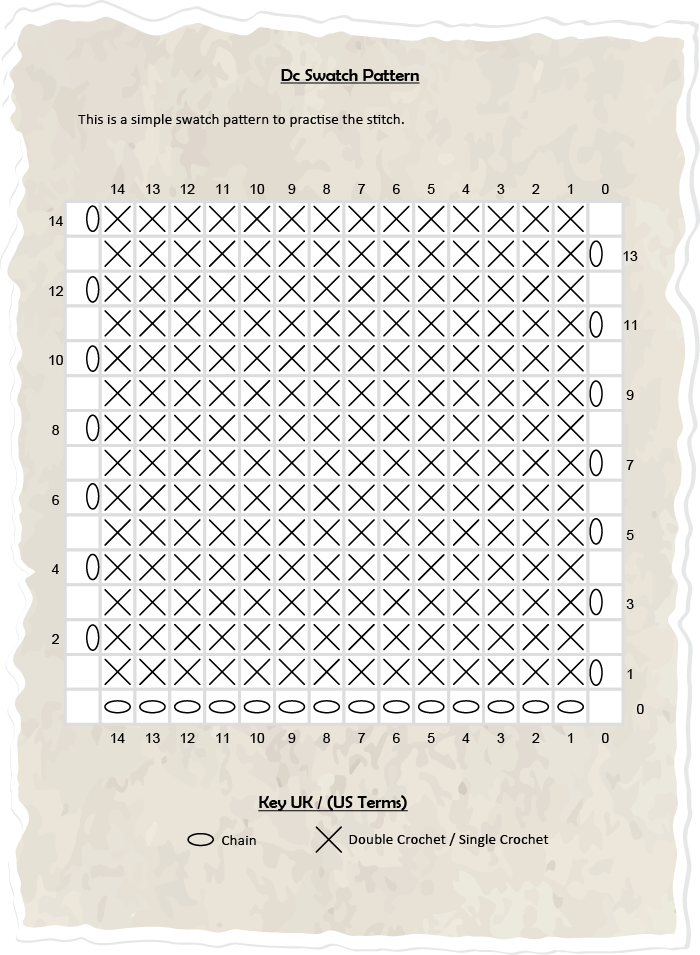
Crochet charts use symbols to represent stitches. The chains on the side represent the turning chain.
The stitch count is along the bottom and top. The row count is up the sides.
Charts are read from right to left for one row, then left to right for the next, alternating as you move up.
To dip your toes into crochet patterns, I’ll start with a very simple swatch of double (single) crochet stitches. These are single crochet stitches in US terminology.
I’ll show you written, photo and chart forms. If you want to watch a live demo, the video tutorial covers the swatch at around 12 minutes in.
You can download the pattern here.
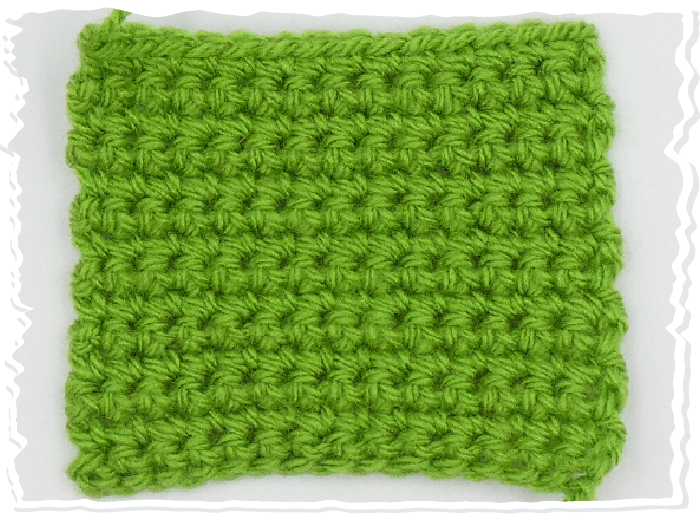
This is the swatch we’ll be making. It has 14 rows and 14 stitches.
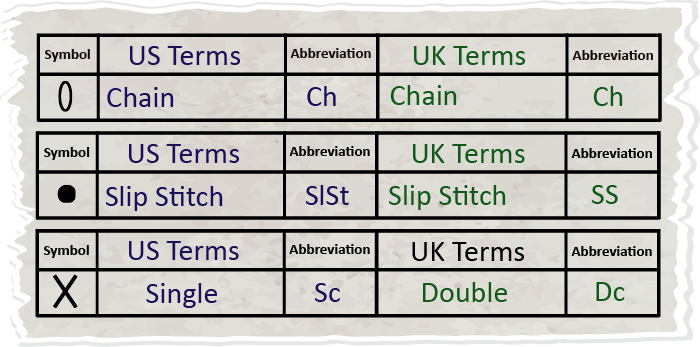
These are the crochet chart symbols and abbreviations for the Dc (Sc) stitch, in both UK and US terminology.
I’ll be using UK terminology for this tutorial, US terminolgy will be in brackets.
Step 1 – Both the written and photo instructions state chain 15 and make a Dc(Sc) in the second chain from the hook.
This tells us that there is a turning chain of one, and there should be 14 stitches.
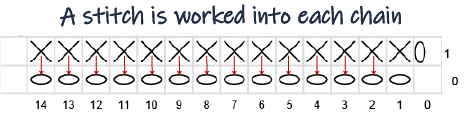
This is clearer to see on the chart.


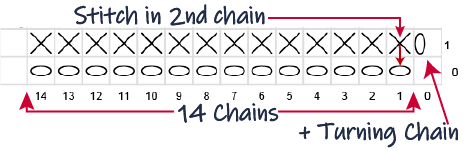
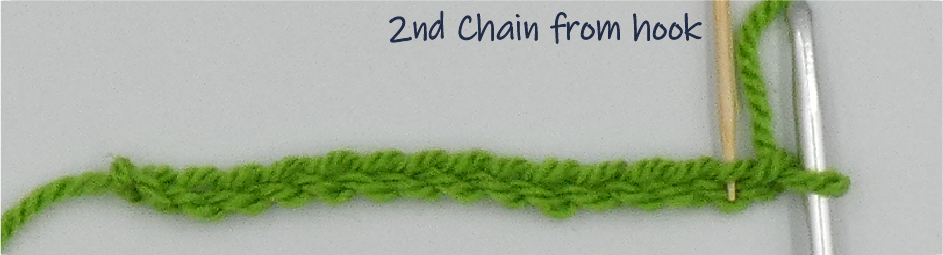
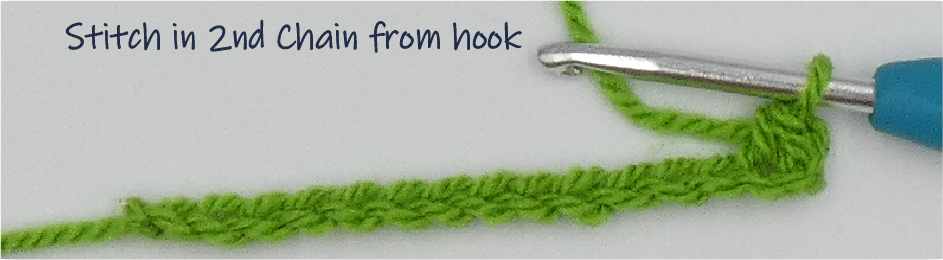
This is how it looks in practise
Step 2 – The next part of row 1 instructs us to crochet 13 Dc(Sc), so we work 1 stitch in each of the remaining chains. This gives us a stitch total of 14.
The chart is read from the right.
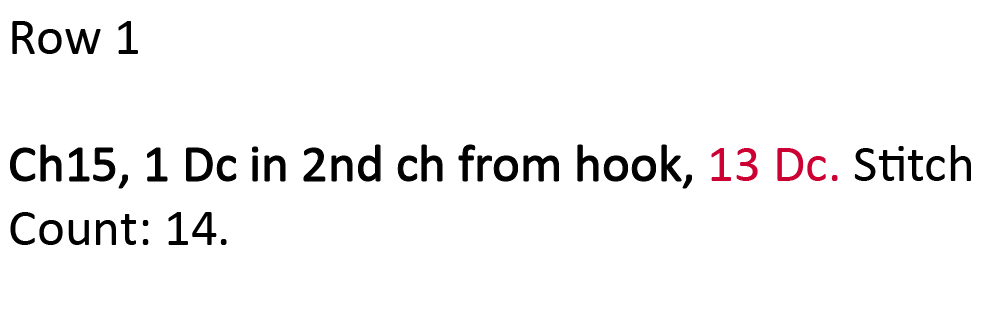
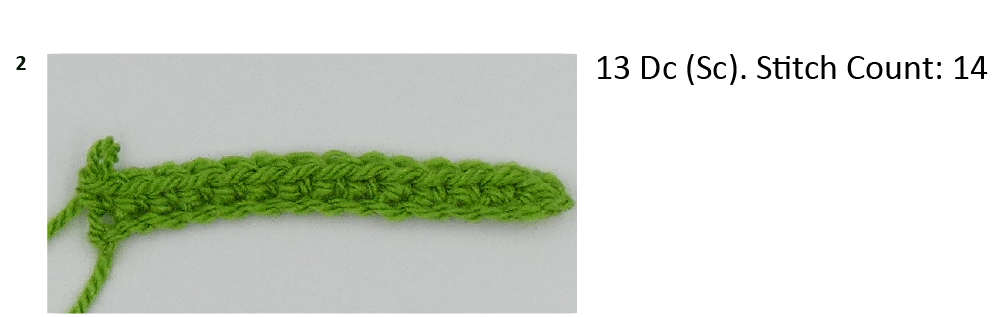
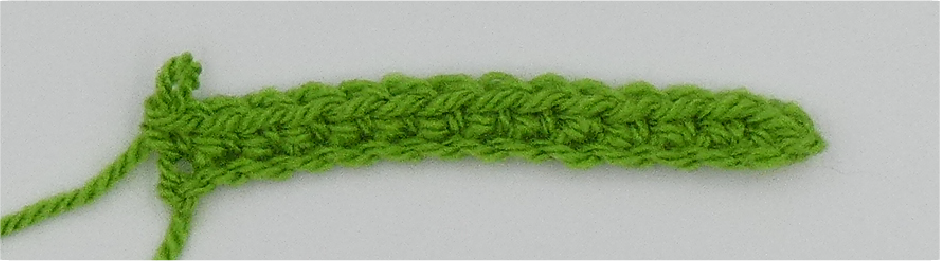
For row 2, we make 1 turning chain, flip the row like a book, and work 1 Dc(Sc) in each stitch. The stitch count should be 14.
The chart is read from the left.
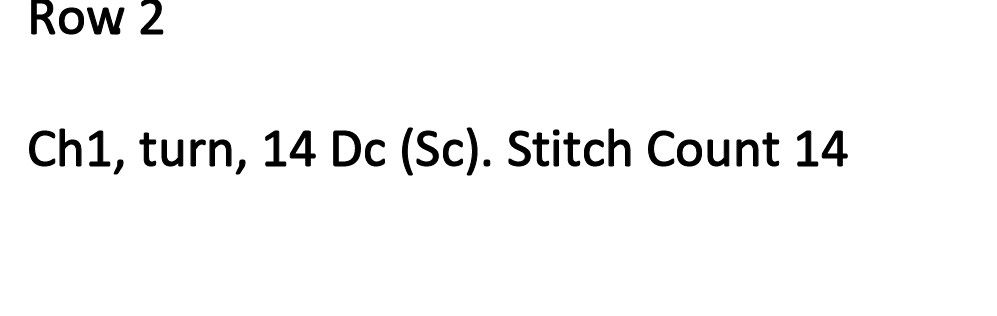
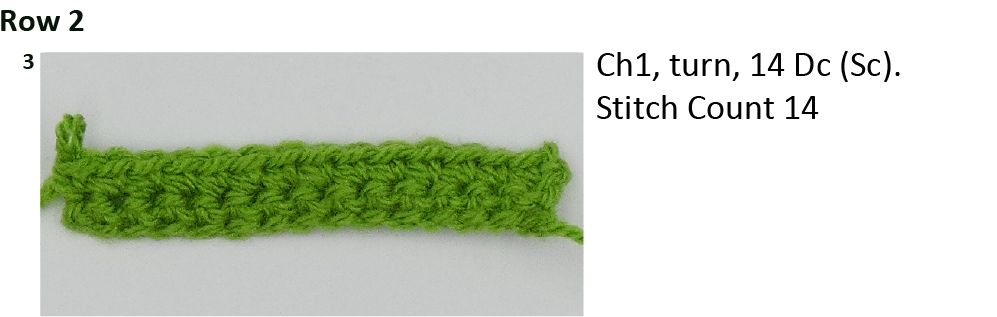
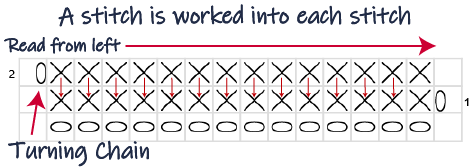
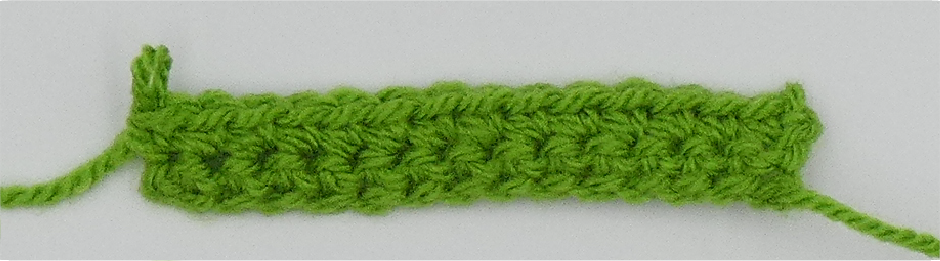
The completed row.
Simply repeat row 2 for the next 12 rows. The stitch count should be 14 each row.
Alternate the reading direction of the chart each row.
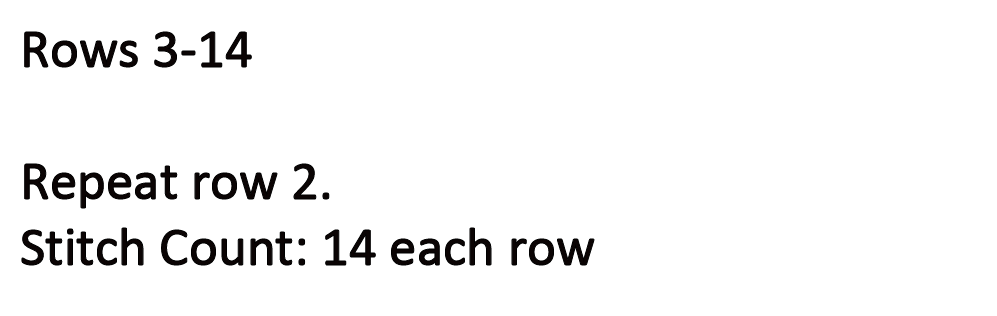
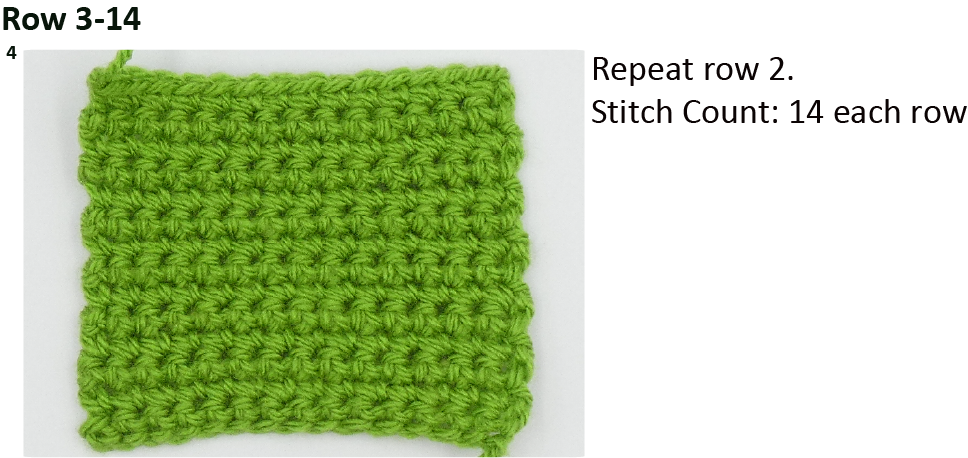
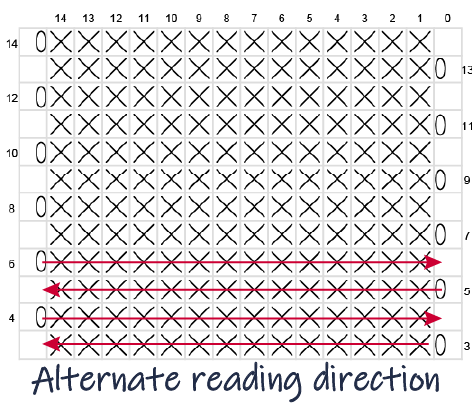

The finished double (single) crochet practise swatch!
Remember to count your stitches at the end of each row, to ensure your edges are even 🙂
 That’s the end of the how to double (single) crochet for beginners tutorial!
You now know how to read a simple crochet pattern to make any double (single) crochet square or rectangle of your choice lol!
As your skills grow, you can crochet cute hair accessories or explore amigurumi.
Before you continue practicing your double (single) crochet, I’d recommend checking out lesson 3 – it’ll hopefully prevent you falling into any bad crochet tension habits! I also explain what crochet gauge means.
Thanks for joining me, see you next time!
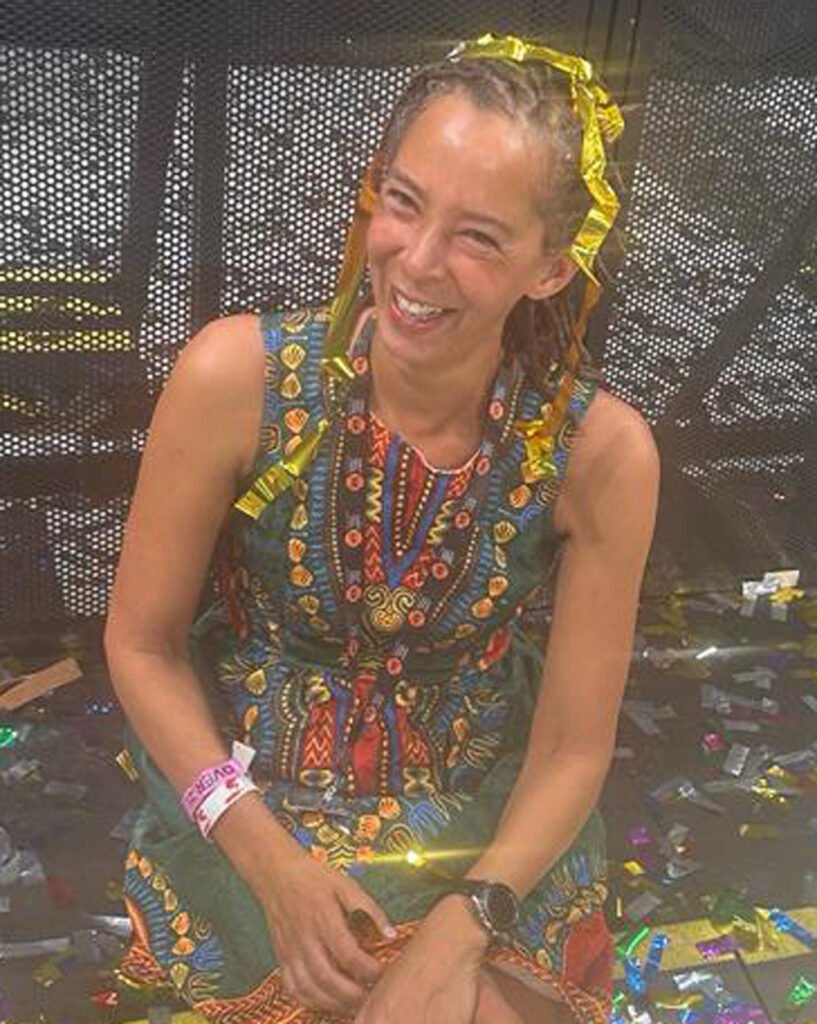
Welcome!
My name’s Katie and I’m a crochet addict!
I learnt to crochet about 20 years ago whilst living in Ireland. I soon had a street stall selling my crochet hats and bags, eventually progressing to organising craft fairs.
I returned to street selling for a few years to fund my travels around Latin America, before settling down and becoming a mum to two cool kids.
I love working with colour and creating vibrant, detailed crochet and wanted to translate that into patterns.
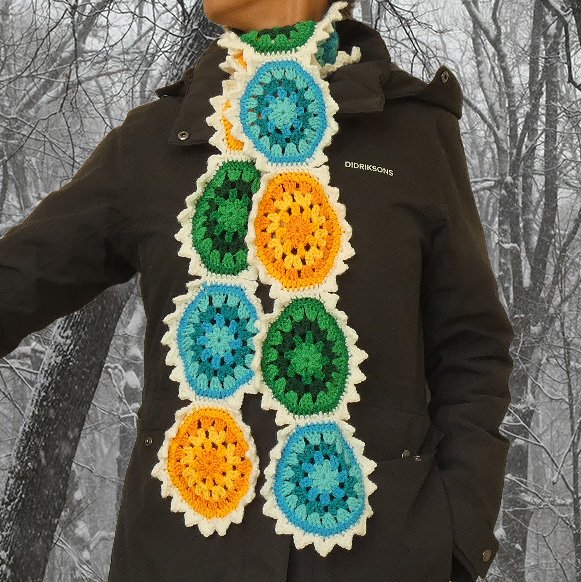
Free Crochet Scarf Pattern – Wagon Wheel
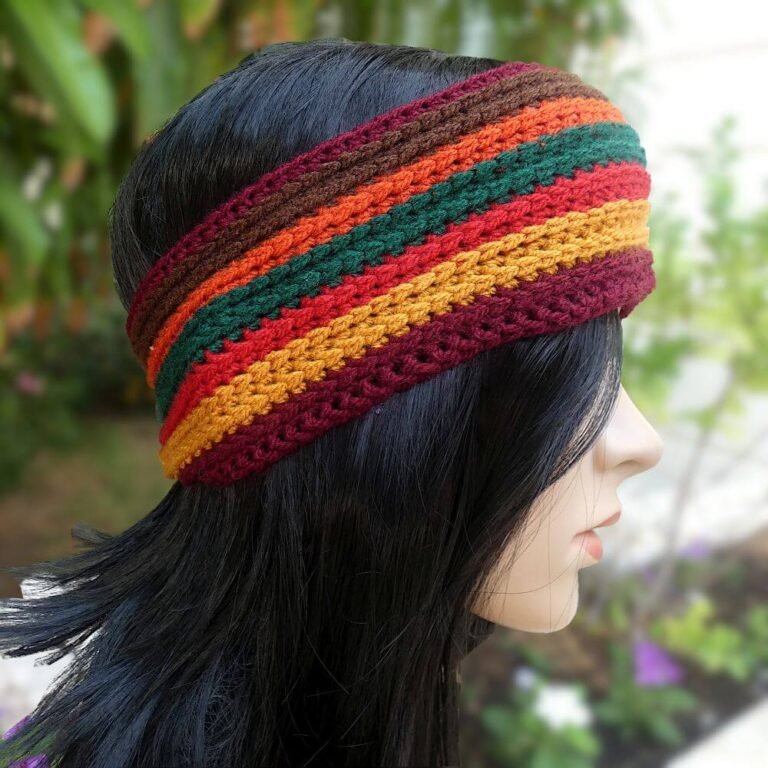
Crochet Ear Warmer Pattern
Crochet Short Scarf Pattern
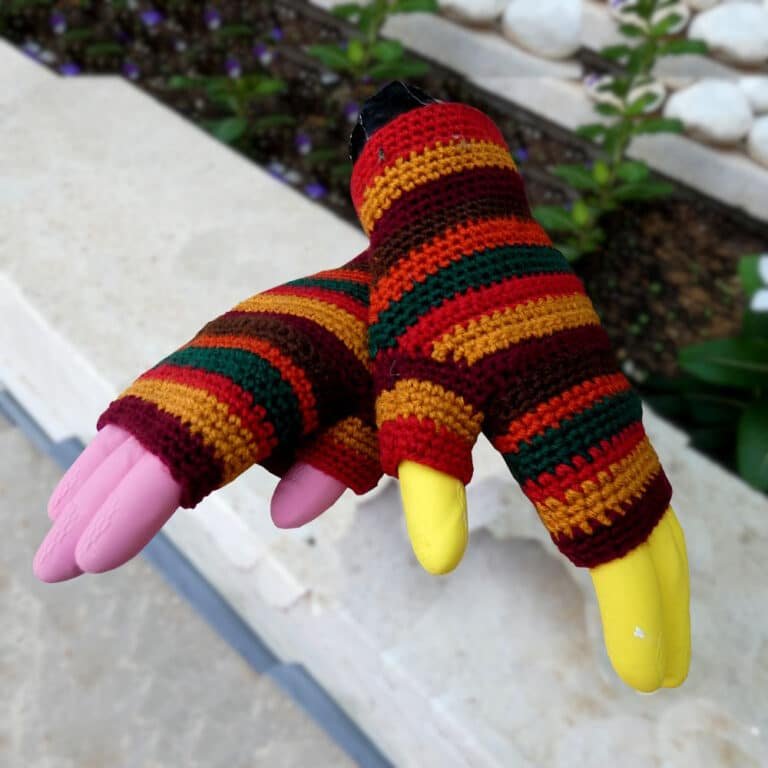
Crochet Fingerless Gloves Pattern