Secure Payments
10% Discount on 3+ Patterns
Secure Payments
Your card information will not be stored on our servers
10% Discount on 3+ Patterns
Buy 3 or more patterns for a 10% discount
Immediate Download
Immediate & unlimited downloads
Your card information will not be stored on our servers
Buy 3 or more patterns for a 10% discount
Immediate & unlimited downloads
Crochet is a great craft to both relax and get the creative juices flowing! It can help with your mental health and self expression.
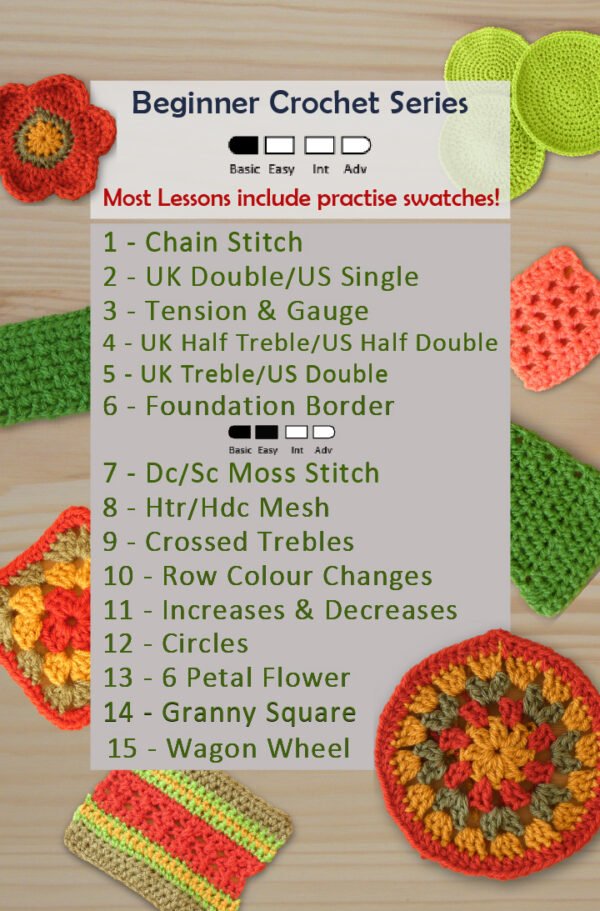
These beginner crochet tutorials are aimed at complete novices. The lessons will cover the basics such as how hold to the hook and yarn, as well as the essential crochet stitches. We’ll cover making circles, changing colours and combining the stitches. I’ll even be teaching you how to read crochet patterns!
Most of the lessons will have a practice swatch to put your new found knowledge into practice.
By the end of this beginners crochet course, you will have the skills and confidence to make hats, bags, blankets and an addiction to yarn!
For those that prefer learning by watching, at the bottom of the page is the video version of the lesson.
“If I were able to leave you with only one piece of crochet advice, it would be to always have fun. Learn the basics, but then just go crazy with your crafty self!” -Twinkie Chan
Contents
Welcome to Lesson 3 of the Beginner Crochet Series!
In this lesson I’ll cover different crochet styles, working with the yarn from the ball, show different methods for holding both the yarn and the hook and tips for getting the right gauge.
Tension refers to the height of your stitch and how tight or loose your crochet style is. It also affects the density and width of your project.
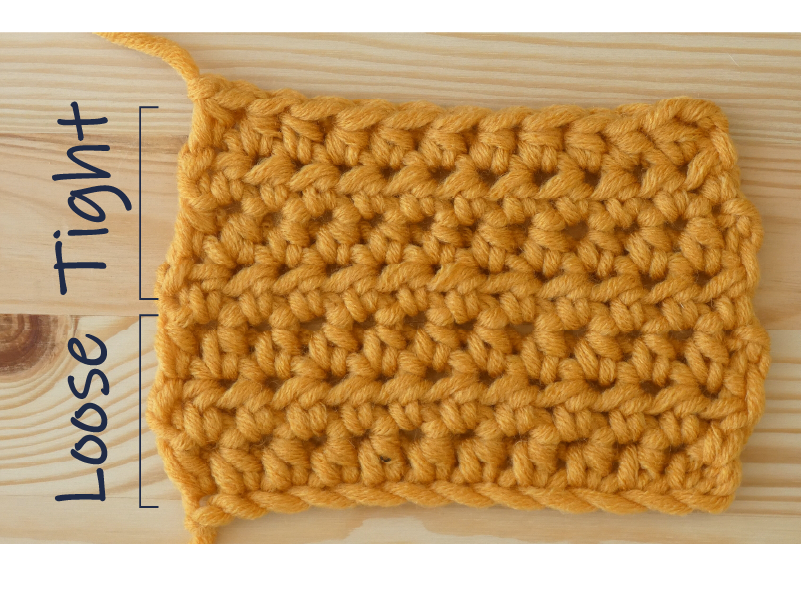
I changed my tension throughout this swatch.
The bottom is wider and then the stitch is looser for the first three rows.
As I tighten my tension, the width gets smaller and the stitch is denser.
It’s important to keep your tension consistent for the best results.
Tension is controlled by how the yarn flows through your hand in your hook position. The yarn flow starts from your ball or skein and should flow smoothly whilst crocheting to stop stitches from getting too tight.
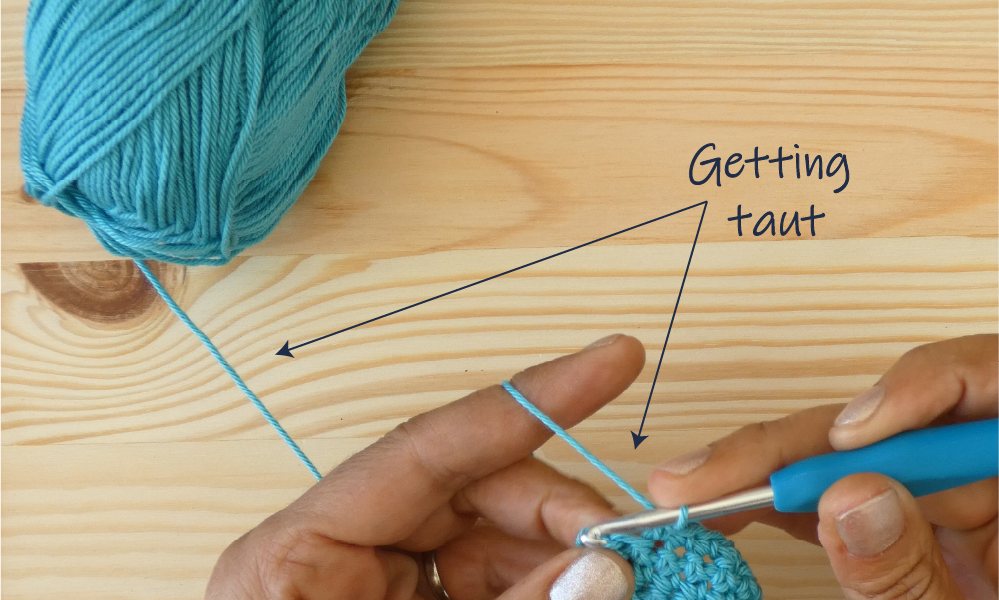
As the slack is used up, the yarn over the tension finger gets tighter. The ball starts to act as a weight and the yarn isn’t flowing well.
Some find that how the yarn is unravelled affects their tension.
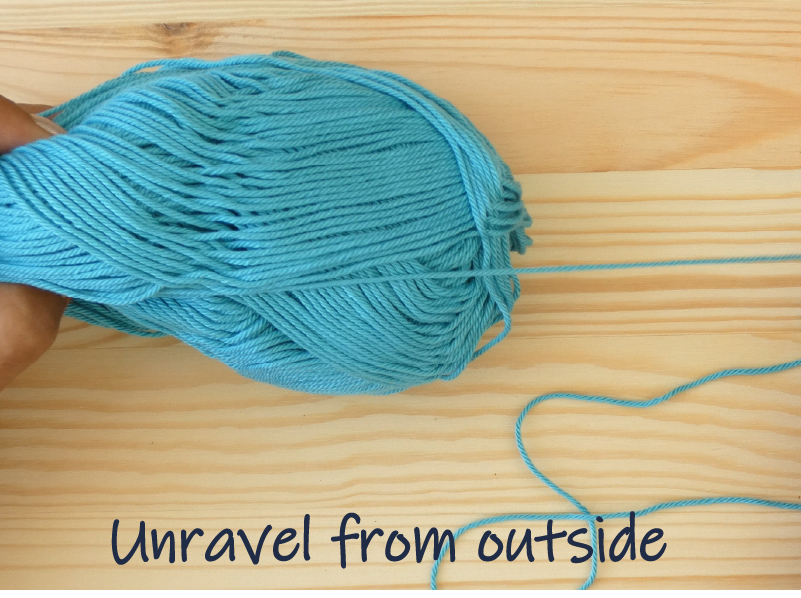
You can unravel your yarn from the outside, which is what I prefer,
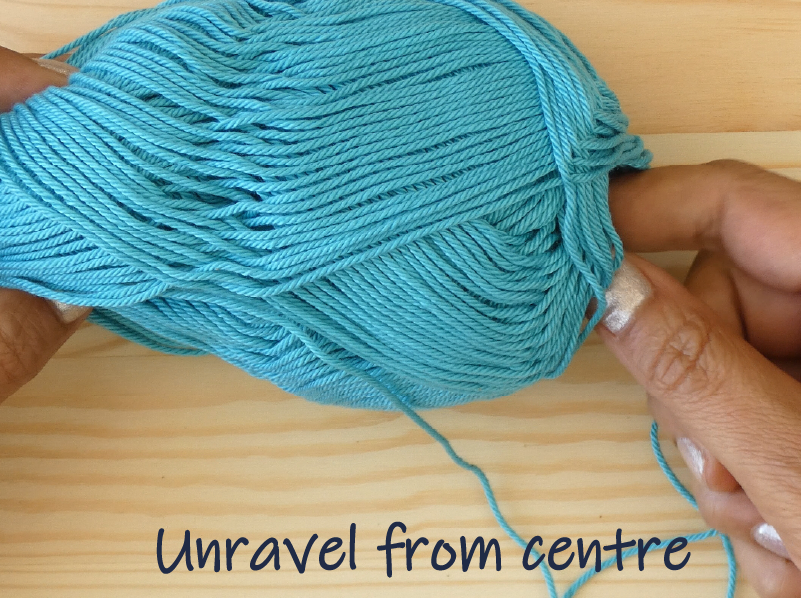
or you can pull it from the centre. I find this gives me more tangles though.
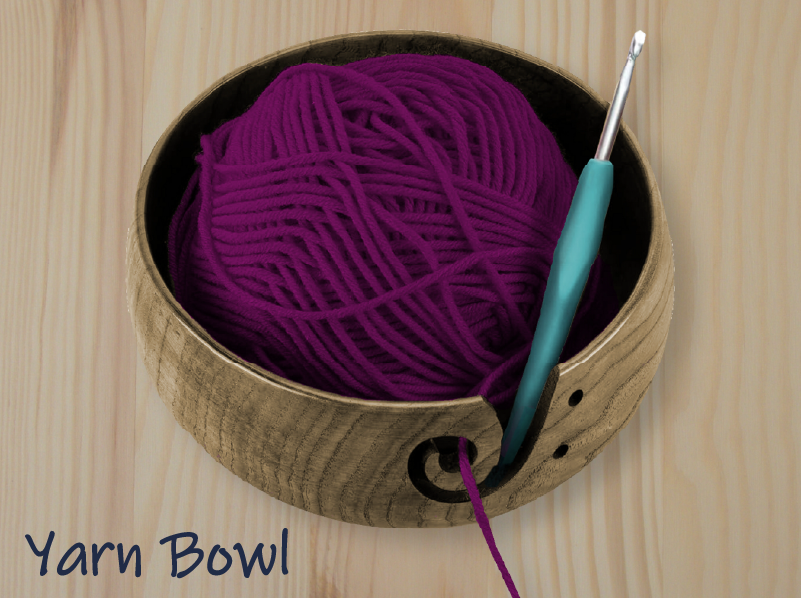
To stop the yarn rolling all over the place, some people use yarn bowls.
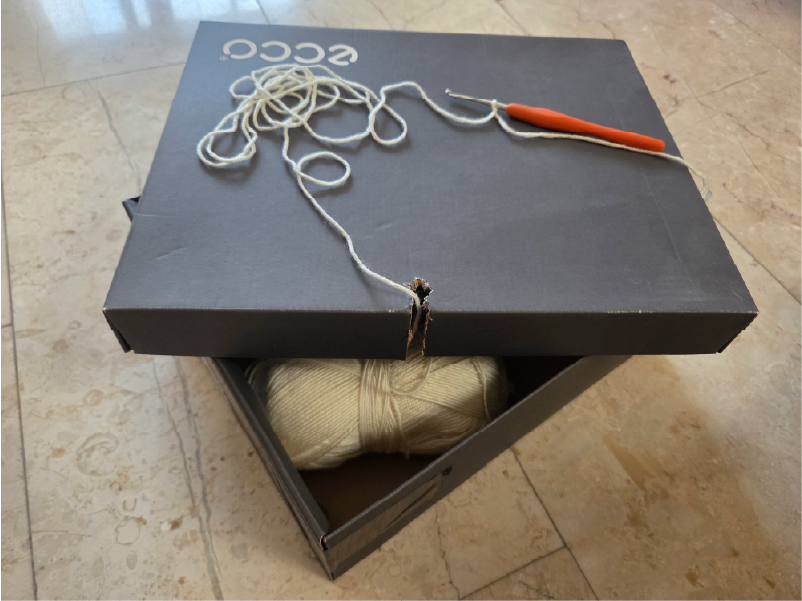
Or you can make your own out of a shoe box or tupperware with a hole in the lid!
These swatches are all made with the same size hook. They all have the same amount of stitches and rows, but are different sizes. This is down to the style of crocheting.
The three crochet styles are known as Yanker, Rider and Lifter.
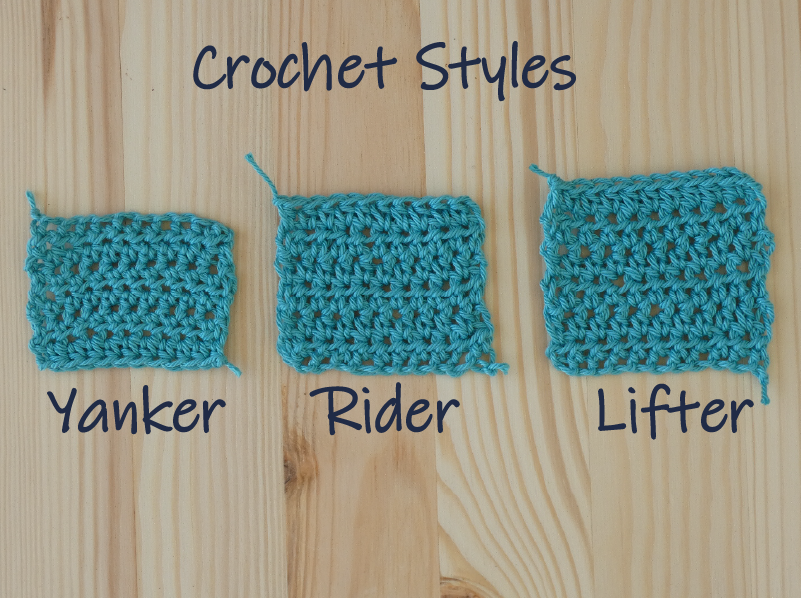
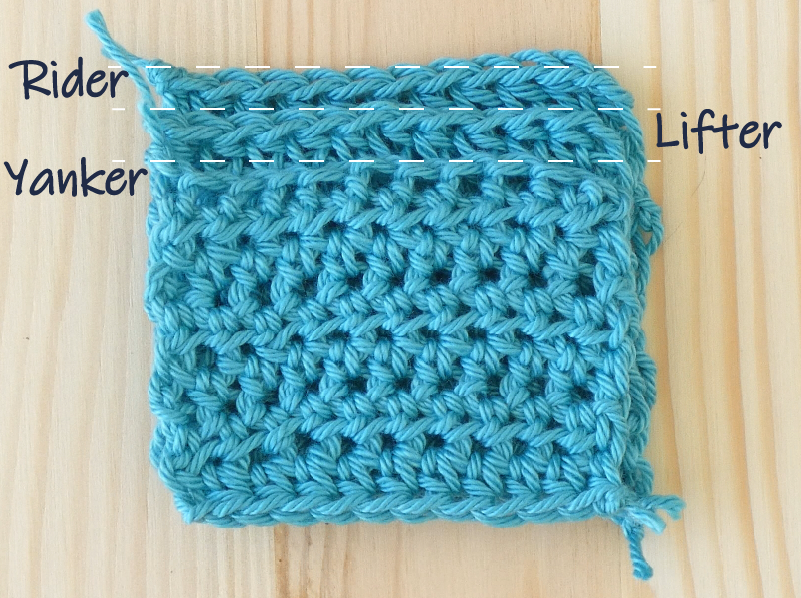
Crochet styles are based on what’s known as the Magic Loop, which is the loop created when you pull the yarn back through the stitch. It can be made bigger or smaller, depending on your slack and hook position.
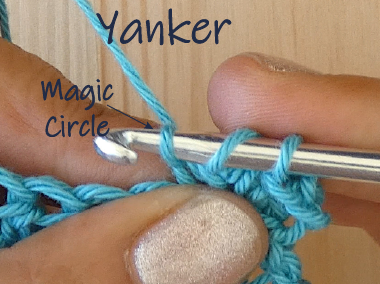
The yanker style creates the tightest stitches.
The magic loop is smaller than the loop on the hook, and the stitich below is getting pulled up.
This is usually caused by yanking back the yarn with your tension finger.
You can fix this by checking you have enough slack and bringing your hook up a little more
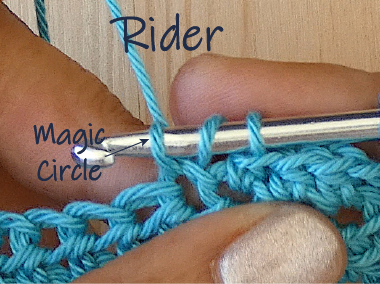
With the rider style the hook shaft is parallel to the work and sits on top of the stitches.
The magic loop is level with the loop on the hook and the stitch below isn’t getting pulled up as much.
This is the ideal style to aim for.
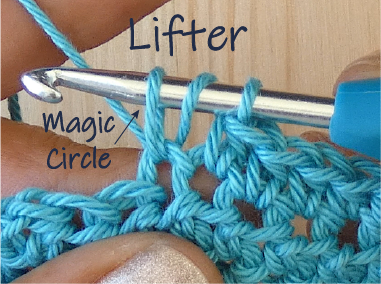
The lifter style is when the magic loop becomes longer.
This can be caused by lifting the hook higher than the loop on the hook, or the yarn flowing too freely over your tension finger.
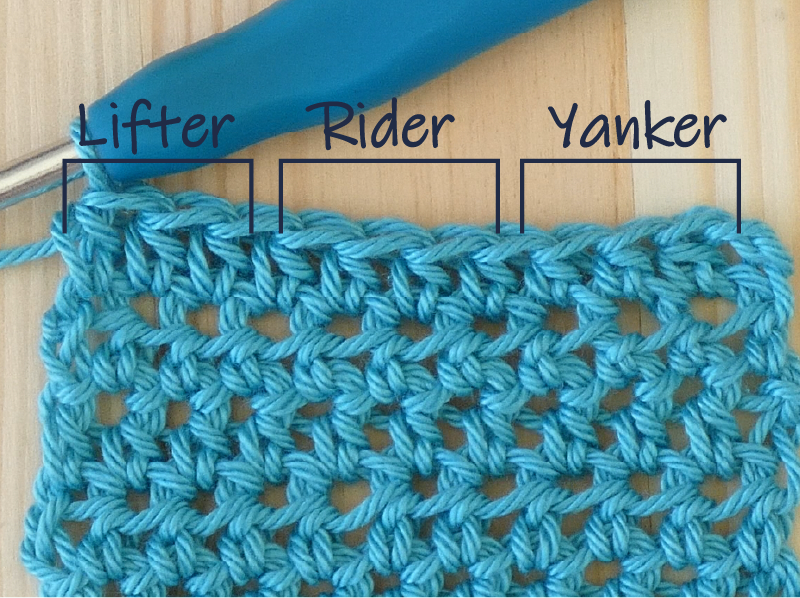
You can see here how the stitch height increases with each style.
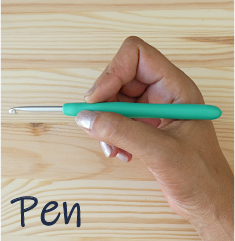
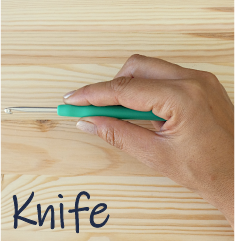
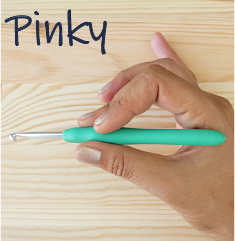

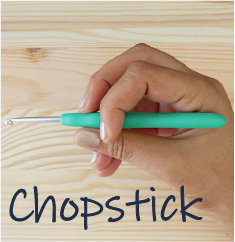
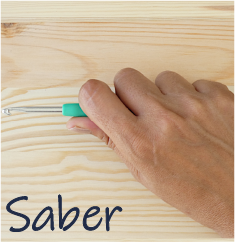

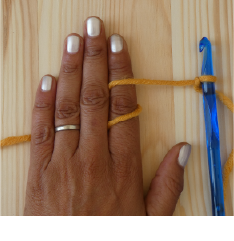
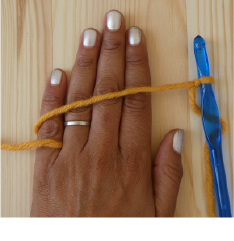
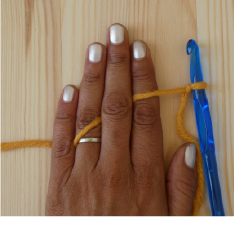
The majority of the yarn holds use the middle finger as support.
In general, when holding the yarn, it sits over the index finger.
the yarn always sits over the index finger.
You’ve worked on your tension but your work still looks like one of these examples. This could be because the tension you use whilst making the chain could be different to when you start making the stitches.
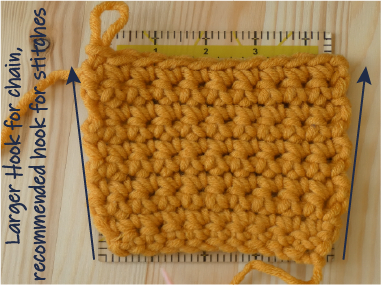
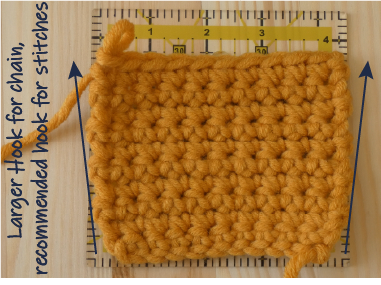
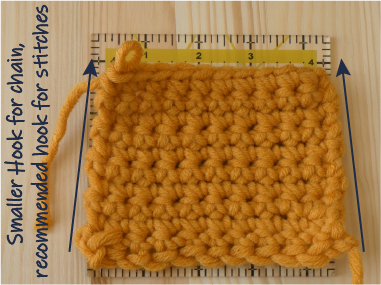
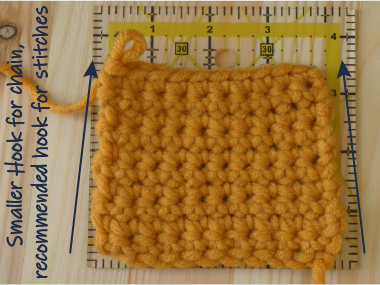
If you’re using the recommended hook size but your work slants out, then make the chain with the next hook size up before using the correct size for the stitches.
If your work slants in from the base, then try making your chain with the next hook size down and change to the correct size for the stitches.
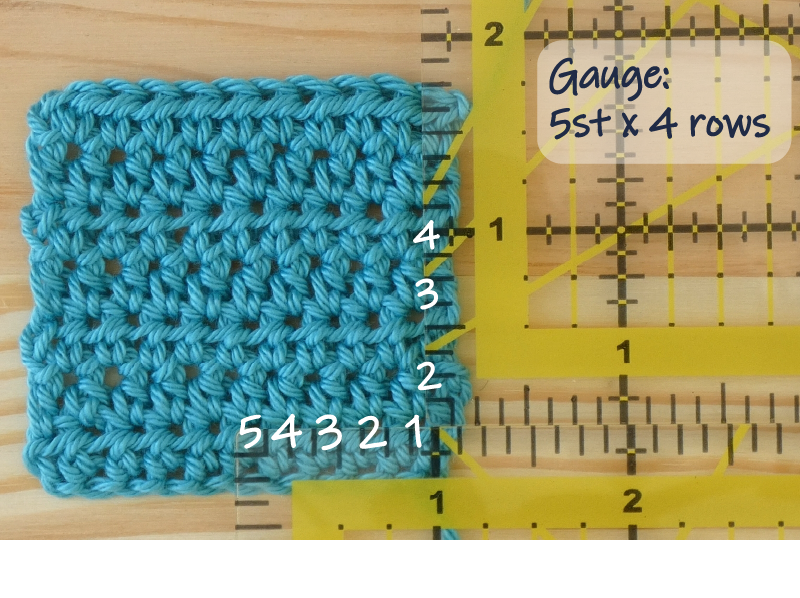
Gauge refers to how many stitches and rows there are per inch. These measurements are used in patterns to ensure that your project ends up the same size as the designers.
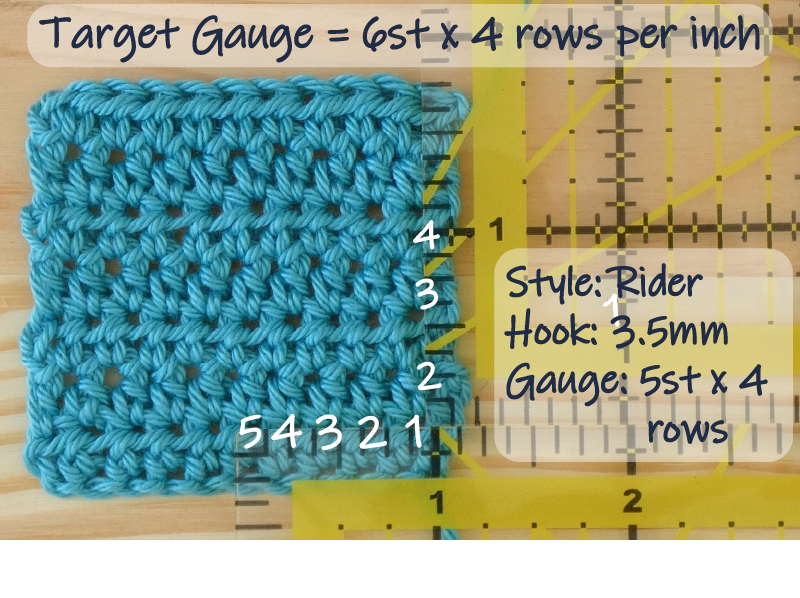
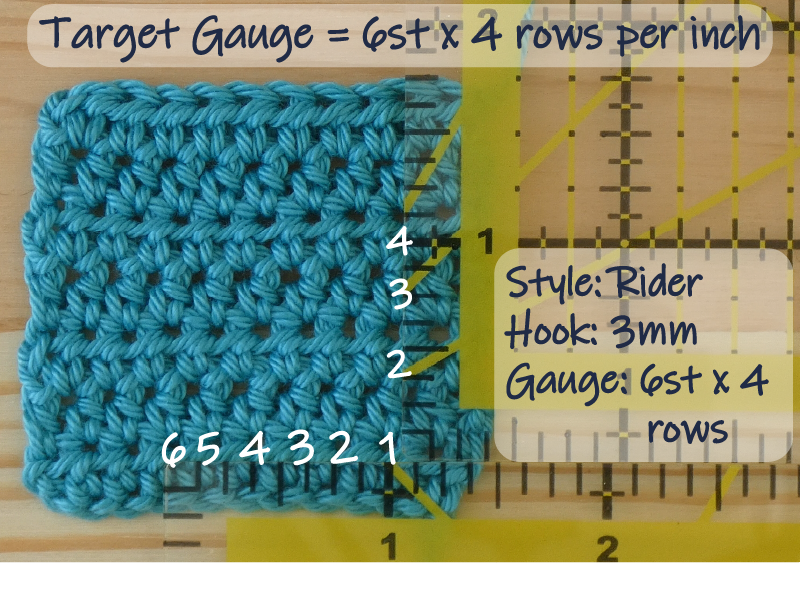
These two swatches are made with rider tension, but different size hooks.
They’re pretty much the same height, but the width is different.
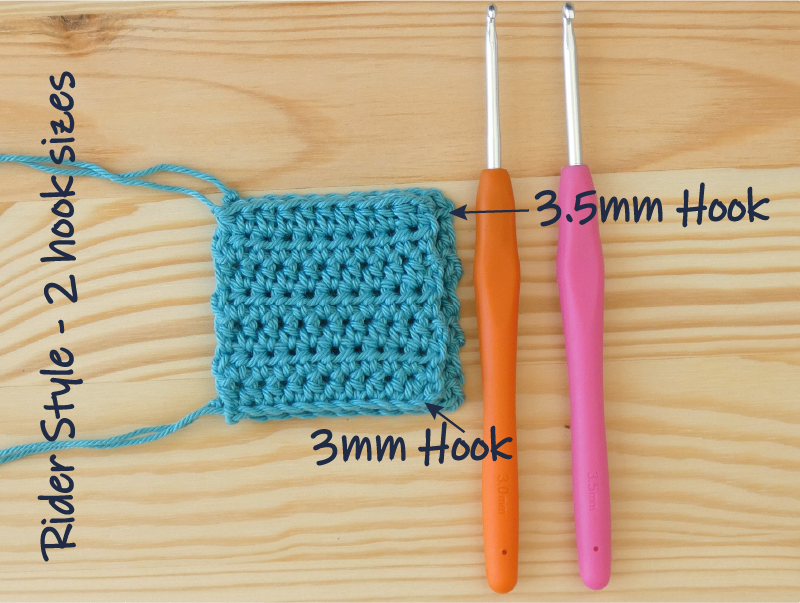
For this swatch I was trying to achieve a gauge of 6 stitches and 4 rows per inch with a 3.5mm hook. So, although I have 4 rows per inch, I only have 5 stitches.
I went down to a 3mm hook and was able to get the right gauge.
To recap –
Gauge is the amount of rows and stitches within a specified measurement.
Tension affects the density, width and height of your project, which is determined by your yarn flow and crochet style.
This table shows which solution you may need to fix your tension and/or gauge.
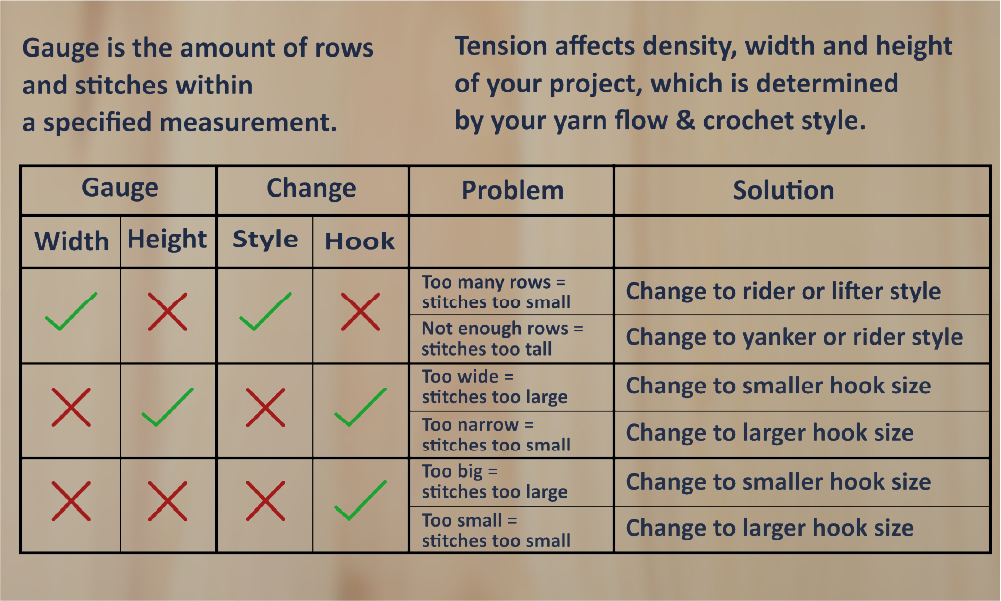
Row 1 – If your swatch has the right gauge for width, but not for height, you need at adjust your crochet style depending on if there are too many or too little rows for the height.
Row 2 – If the swatch is the right height, but too wide or not wide enough, then you need to keep the same tension, but change your hook size. Change to a smaller hook if it’s too wide and a larger hook if it’s too narrow.
Row 3 – If both width and height are too big or too small, then you need to change your hook size.
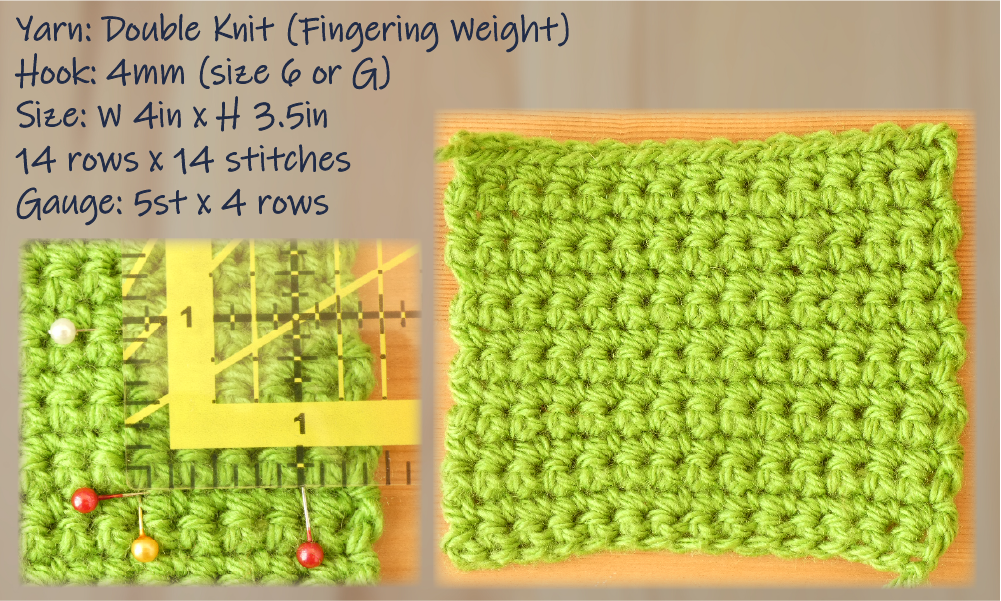
If you want to practice your tension, see if you can match this swatch from lesson 2.
It’s made with a double knit acrylic yarn with a 4mm hook. I think in the US this is a fingering weight yarn and a size 6 or G hook.
I hope this helped with improving your tension. In lesson 4 we’ll be learning the half treble stitch half double in the US – see you there 🙂
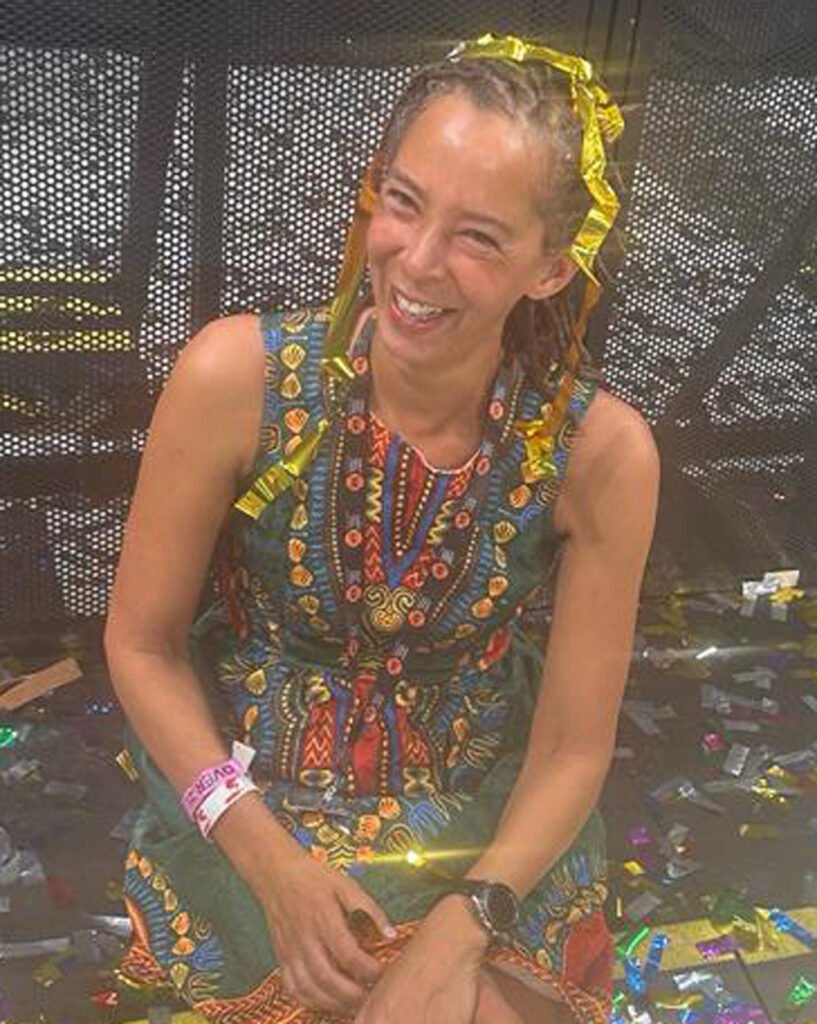
Welcome!
My name’s Katie and I’m a crochet addict!
I learnt to crochet about 20 years ago whilst living in Ireland. I soon had a street stall selling my crochet hats and bags, eventually progressing to organising craft fairs.
I returned to street selling for a few years to fund my travels around Latin America, before settling down and becoming a mum to two cool kids.
I love working with colour and creating vibrant, detailed crochet and wanted to translate that into patterns.
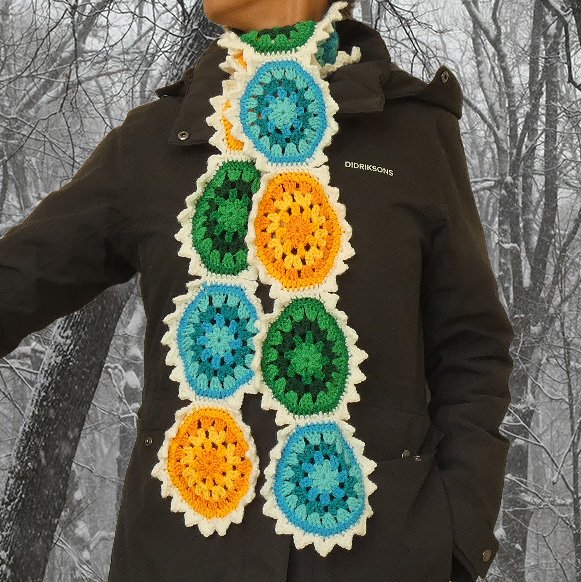
Free Crochet Scarf Pattern – Wagon Wheel
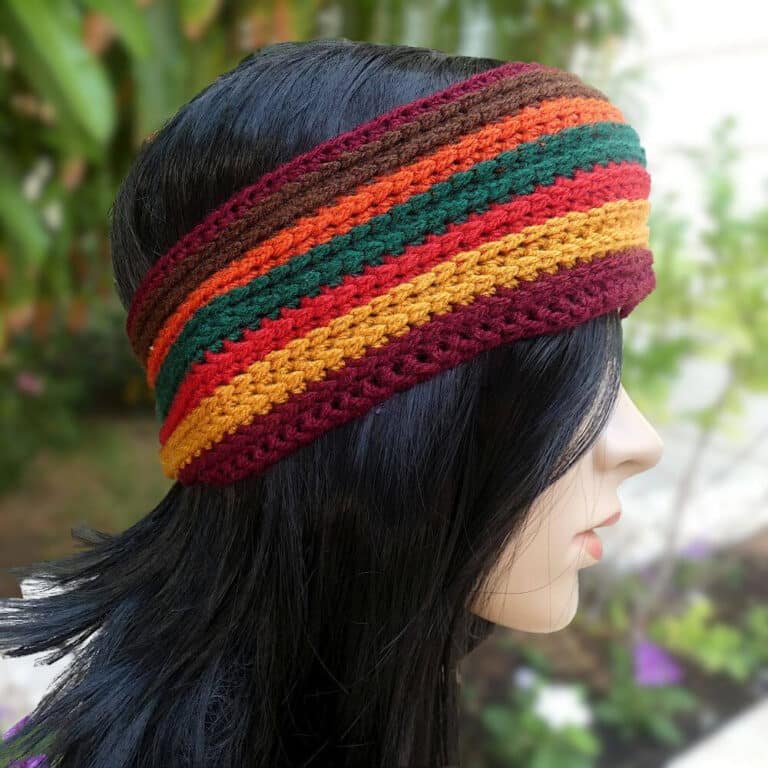
Crochet Ear Warmer Pattern
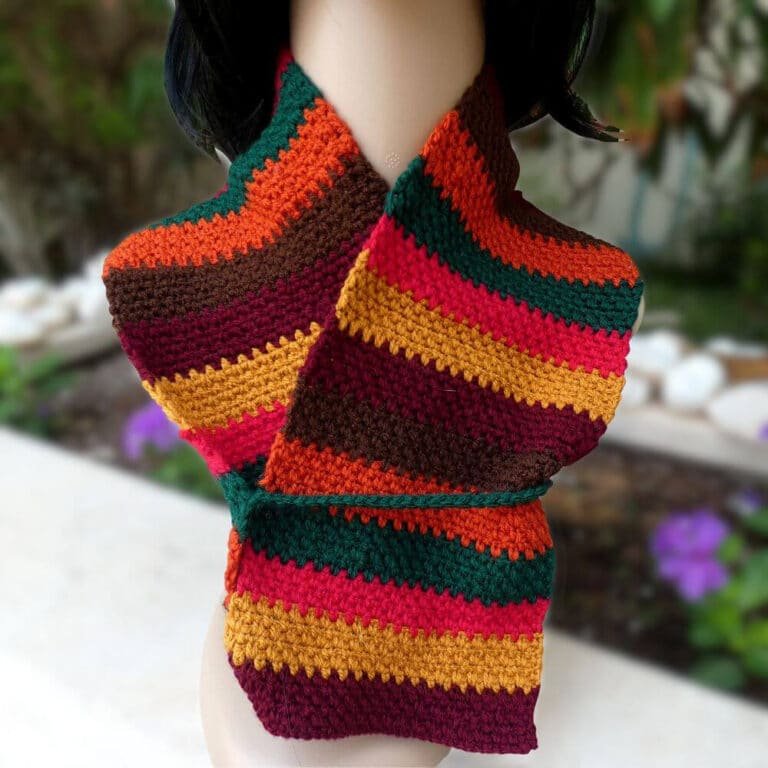
Crochet Short Scarf Pattern
Contents