Secure Payments
10% Discount on 3+ Patterns
Secure Payments
Your card information will not be stored on our servers
10% Discount on 3+ Patterns
Buy 3 or more patterns for a 10% discount
Immediate Download
Immediate & unlimited downloads
Your card information will not be stored on our servers
Buy 3 or more patterns for a 10% discount
Immediate & unlimited downloads
Crochet is a great craft to both relax and get the creative juices flowing! It can help with your mental health and self expression.
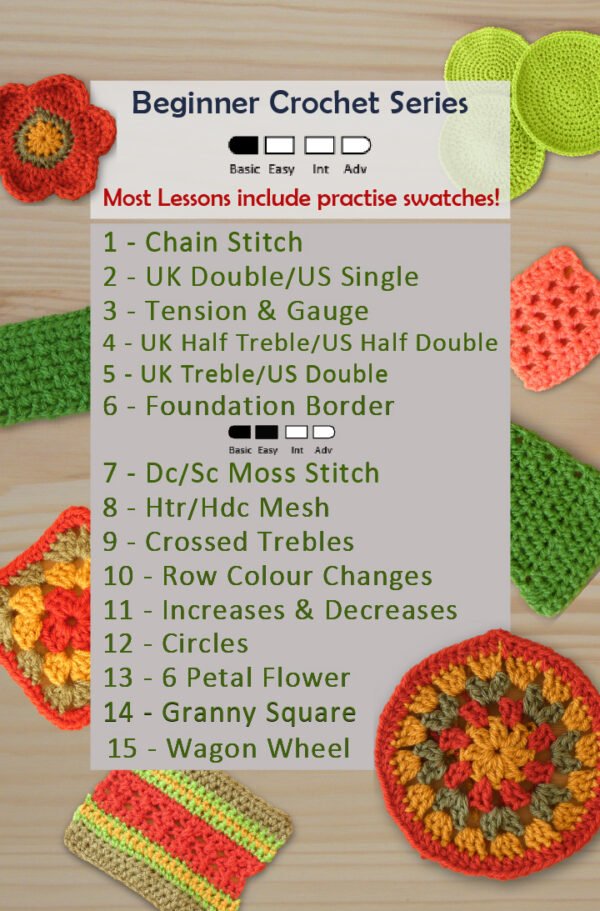
These beginner crochet tutorials are aimed at complete novices. The lessons will cover the basics such as how hold to the hook and yarn, as well as the essential crochet stitches. We’ll cover making circles, changing colours and combining the stitches. I’ll even be teaching you how to read crochet patterns!
Most of the lessons will have a practice swatch to put your new found knowledge into practice.
By the end of this beginners crochet course, you will have the skills and confidence to make hats, bags, blankets and an addiction to yarn!
For those that prefer learning by watching, at the bottom of the page is the video version of the lesson.
“If I were able to leave you with only one piece of crochet advice, it would be to always have fun. Learn the basics, but then just go crazy with your crafty self!” -Twinkie Chan
Contents
Welcome to Lesson 1 of the Beginner Crochet Series!
In this first lesson I’ll cover crochet tools, the slip knot, holding the hook, how to hold the yarn and the chain stitch.
Yarn is usually either a natural fibre – think cotton, mohair, aplaca to name a few, or a synthetic yarn like acrylic and nylon. These types can also be mixed i.e 40% cotton/60% acrylic. There’s a huge choice which will be influenced by the project, costs and personal preference.
You can learn more about Yarn types here
Yarn thickness is known as “weight”. The weight of your yarn will again depend on the project and personal preference. Not all countries use the same crochet terminology, take a look at my conversion table for different crochet terms.
I recommend learning with a double knit weight yarn, commonly called DK yarn. This would be considered a Light worseted weight in the US or an 8-ply in Australia. I like stylecraft DK and Knitty as they have a great colour choice and are affordable.
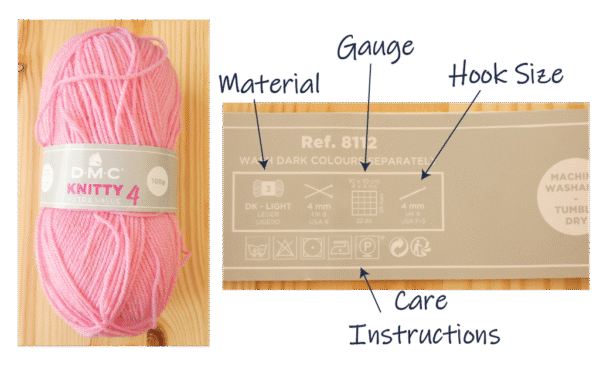
The Yarn label will tell you the material, length and care instructions.
You will also find the hook size and a gauge measurement. I go into more detail about gauge here.
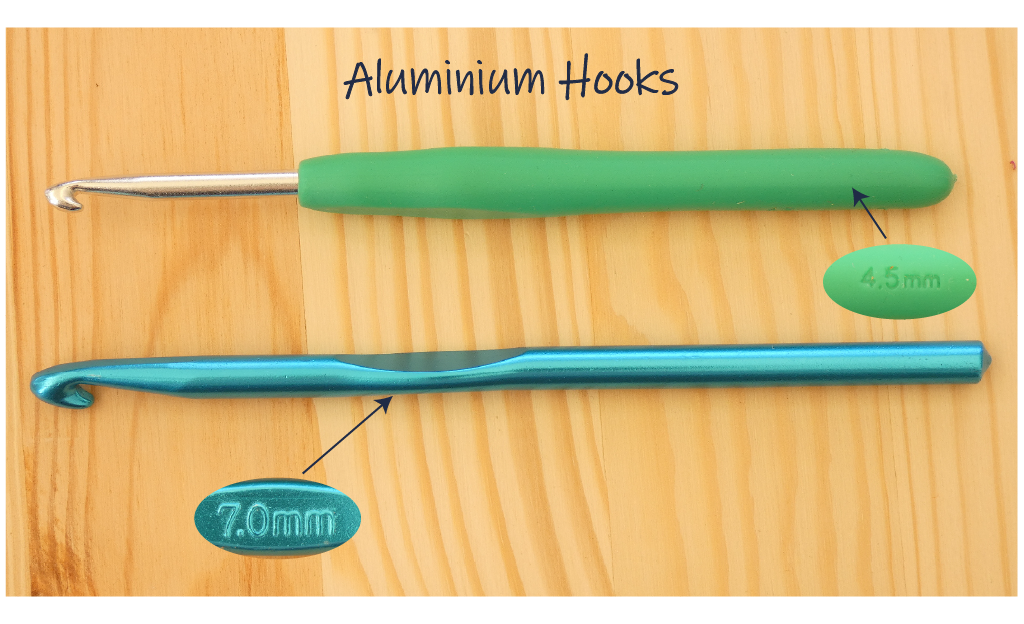
Crochet hooks come in many different shapes and sizes. Some have rubber grips, some are made from wood and others from aluminum.
The sizing system is also different between countries. The UK uses millimetre’s whilst the US uses letters. It’s recommended to use millimeters for consistency and clarity as sometimes both systems have conflicting labels. Here’s a handy conversion chart for hook sizes
A hook with an aluminium head is the easiest to begin with.
The hook size can usually be found on the handle, either in the middle or on the end.
If your hands get tired quick or are prone to cramping, hooks with a grip may help.
Scissors are needed to cut the yarn.
A darning needle to weave the ends in.
It’s easy to miss the first and last stitch, so stitch markers can help. You can also use bobby pins, paper clips or yarn for this!
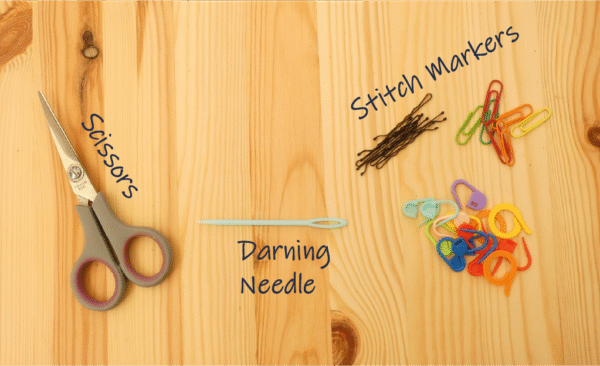
Okay, so now we have our tools. Let’s begin.
First unravel some yarn from the ball to create some slack. This will affect your stitch size, which is referred to as tension. Always keep some slack whilst crocheting!

Hold the end of the yarn in your palm.
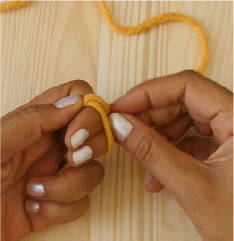
With your palm facing you, take the yarn, wrap it around your index and middle fingers to form a ring.
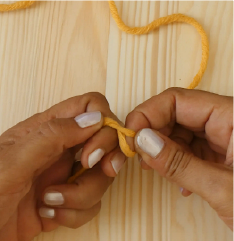
Make a loop by pushing the yarn through the small gap between your fingers and the wrapped yarn.
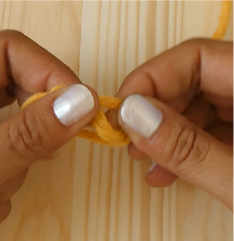
Take the ring off your fingers as you hold the loop in place. Finish pushing the loop up through the ring.
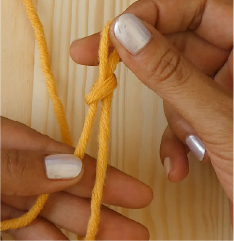
Hold the loop and tighten it by pulling slightly on the tail.
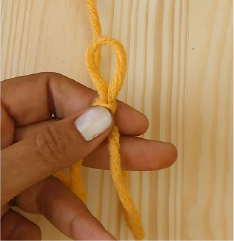
The loop is ready for the hook.
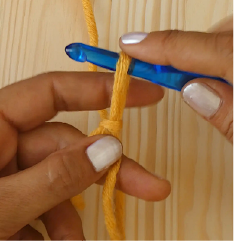
Place your hook in the loop,
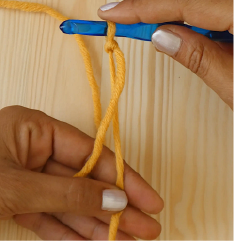
and gently pull on the yarn until the slipknot sits snug on the hook.
The crochet hook will be held in your dominant hand. There are many different ways to hold it, so experiment to see what feel most natural to you.
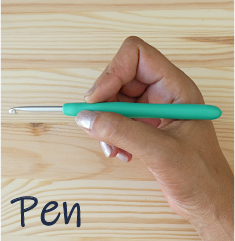
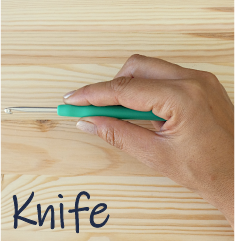
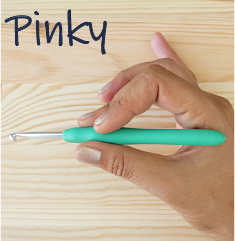

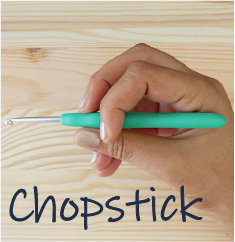
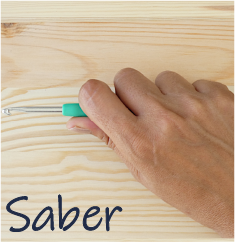
The majority of these holds use the middle finger as support.
An important term to learn is tension – this refers to how tight or loose the stitches are. The way you hold the hook and yarn can have a huge impact on how your stitches turn out. I go into tension in more detail in lessons 2 and 3.
When we move on to the next section, see which hook hold gives you the most dexterity and feels the most comfortable.
This how I hold my yarn, but again – do what feels best for you.
Start with your slip knot on your hook and check that you have some slack on your yarn.
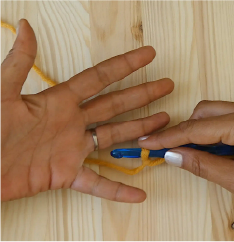
With your palm facing you, hold the hook at the back of your little finger.
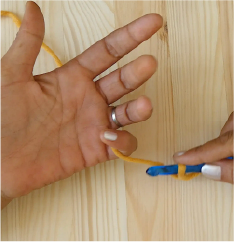
Bring the hook over your little finger,
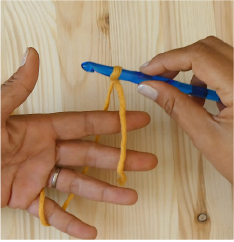
and around the back of your hand.
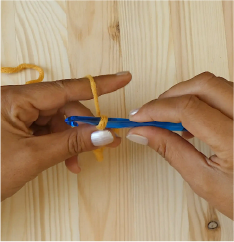
The yarn sits over your index finger. This will help to control your tension.
Here are some other variations of yarn holds. In these examples, the yarn always sits over the index finger. If none of these work for you, then experiment!
The important thing is that you have control of the yarn and it can flow smoothly through your hand.
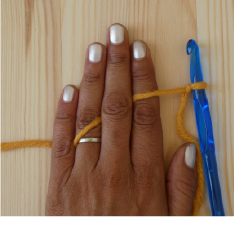
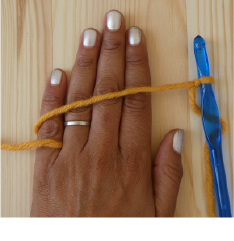
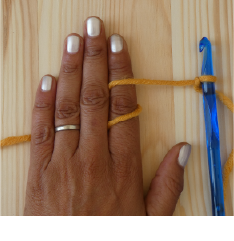

The first row of stitches are worked into a chain, so this will be the foundation of your crochet creation.
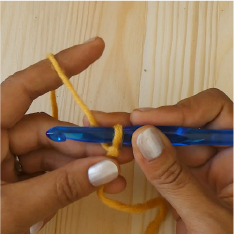
With the hook facing you, keep hold of the knot with your yarn hand.
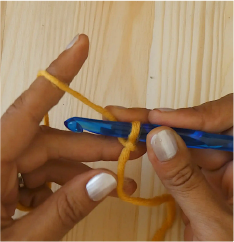
Use your index finger to bring the yarn over the hook,
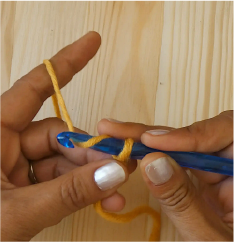
and to the front, so the yarn sits in the head of the hook.
This action is called “yarning over”.
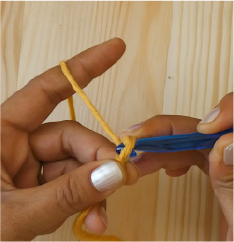
Angle the hook head down, and pull the yarn through the loop on the hook.
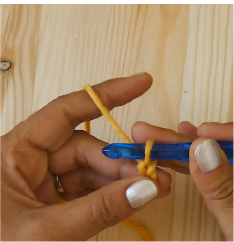
That’s your 1st Chain! The loop on the hook isn’t counted as a chain.
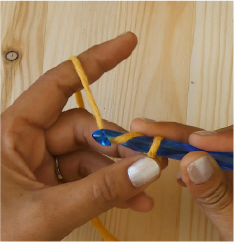
Hold the top of the chain, yarn over,
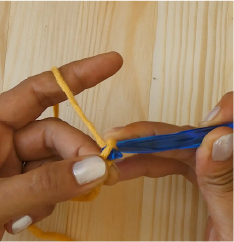
and pull the yarn through the loop on the hook.
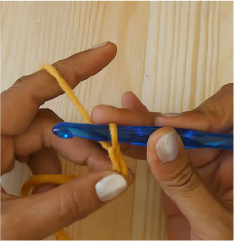
That’s the 2nd chain, and all there is to the chain stitch!
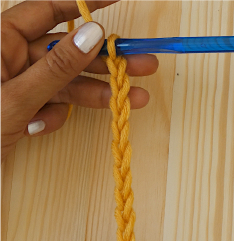
Practise making chains until you’re confident that they’re all a consistent size.
You want to build your stitches on a strong foundation after all! It will also get you used to holding the hook and yarn – experiment until you find the methods that suit you.
Once you have the chains down, your ready for Lesson 2 – The first stitch!
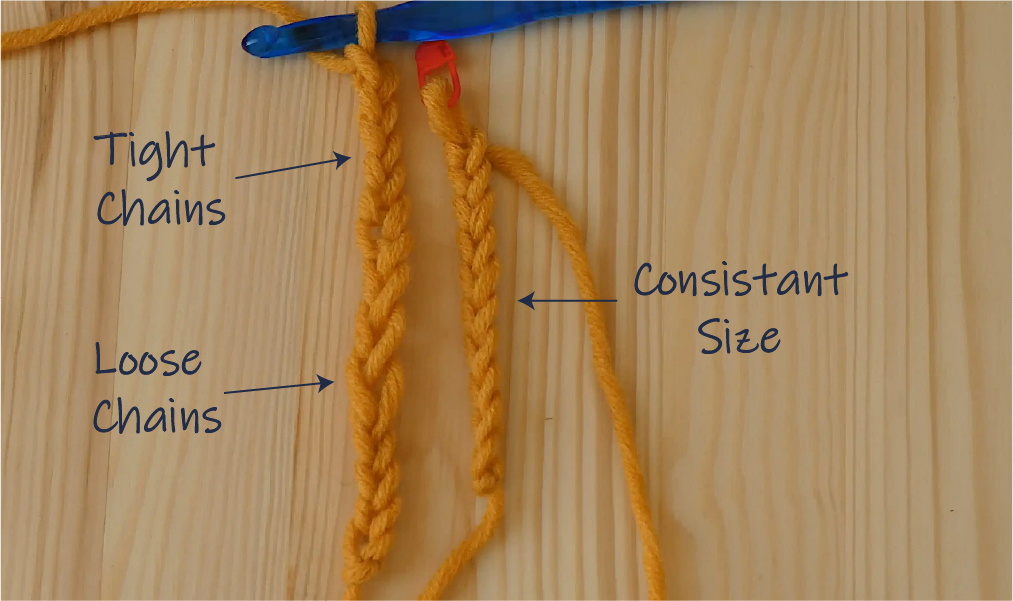
TIPS
Being able to read a crochet pattern opens up the world of crochet – you can find patterns that appeal to you and learn new techniques and stitches.
Patterns can come in written, photo and chart forms. In lesson 2 I’ll show you how to read patterns and you can follow along with the practice swatch.

These are the chain symbols and abbreviations in both UK and US terminolgy.
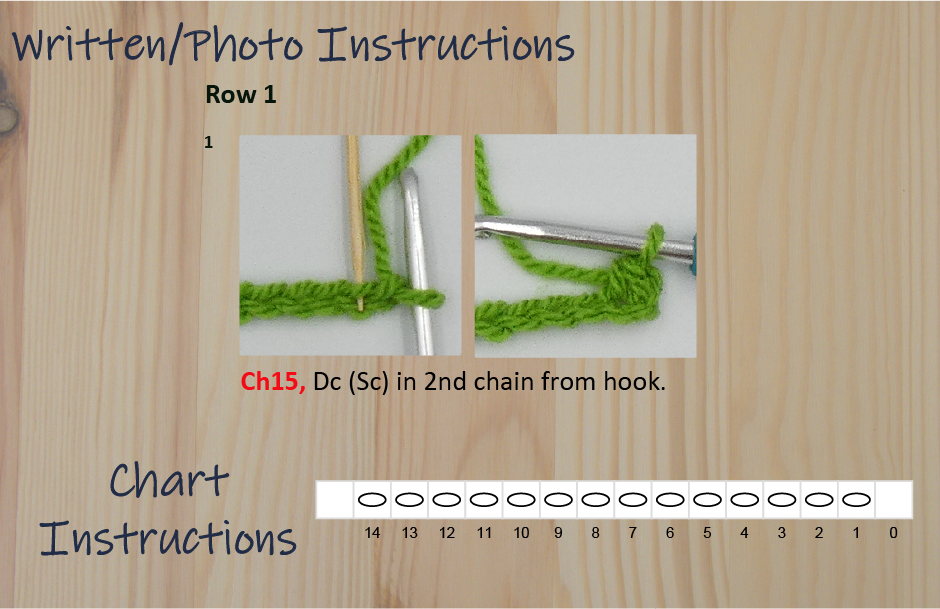
In written and photo instructions, the abbreviation will have a number next to it, to let you know how many chains to make.
Charts normally have a row of numbers.
I hope you’ve enjoyed this lesson, please continue to lesson 2 to learn your first stitch 🙂
Welcome!
My name’s Katie and I’m a crochet addict!
I learnt to crochet about 20 years ago whilst living in Ireland. I soon had a street stall selling my crochet hats and bags, eventually progressing to organising craft fairs.
I returned to street selling for a few years to fund my travels around Latin America, before settling down and becoming a mum to two cool kids.
I love working with colour and creating vibrant, detailed crochet and wanted to translate that into patterns.
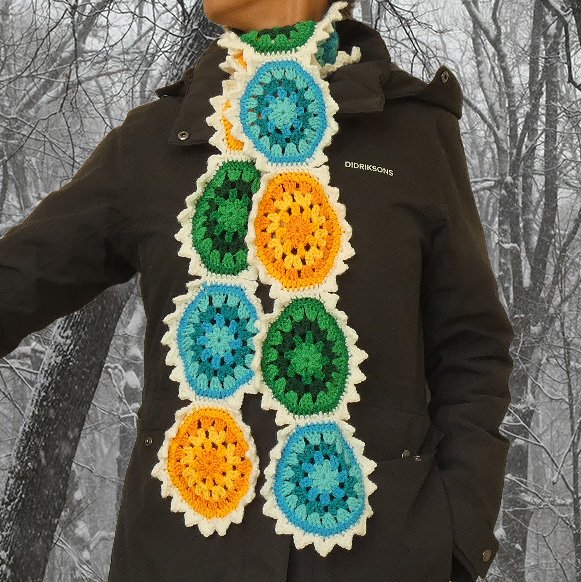
Free Crochet Scarf Pattern – Wagon Wheel
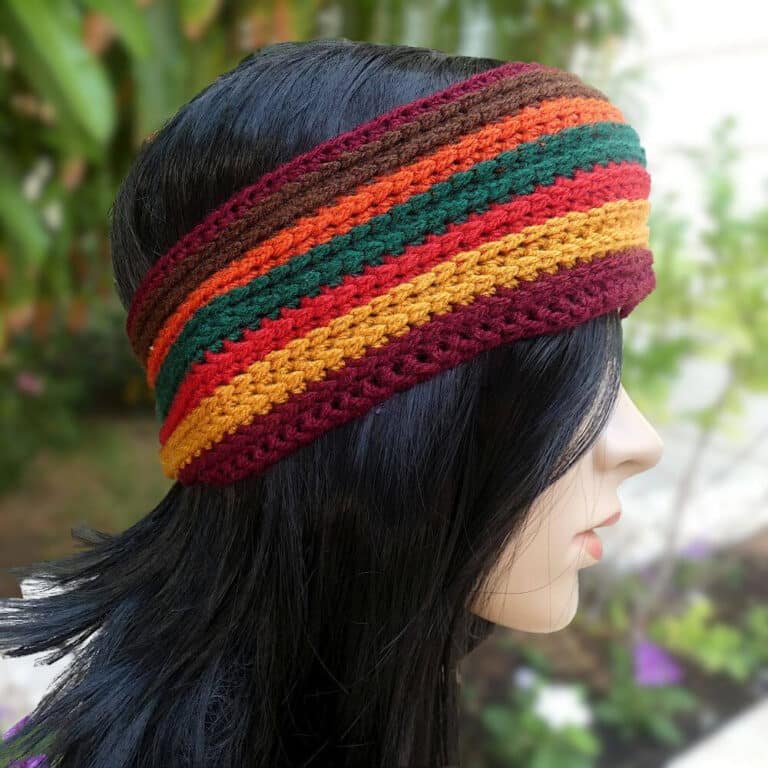
Crochet Ear Warmer Pattern
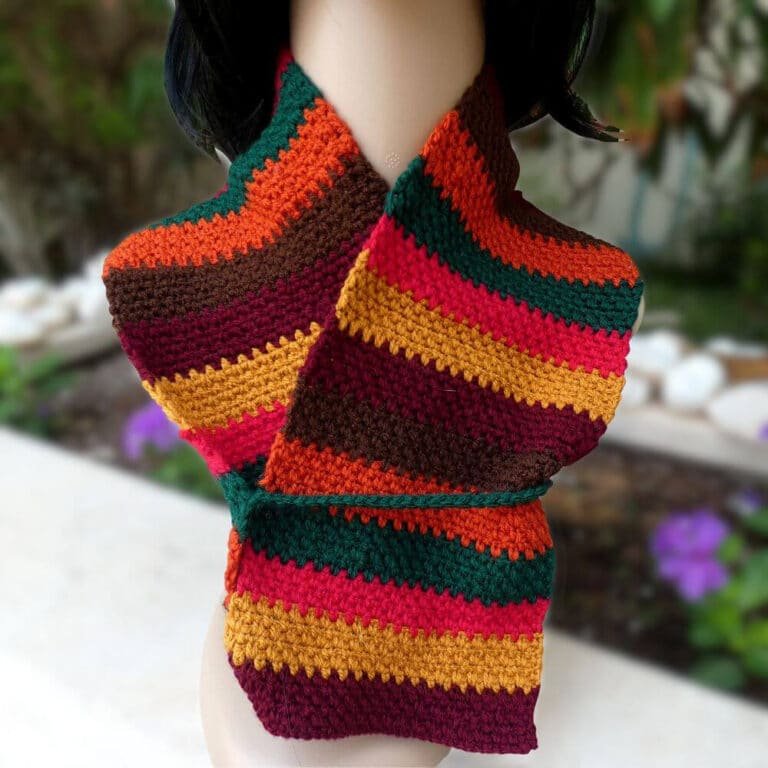
Crochet Short Scarf Pattern
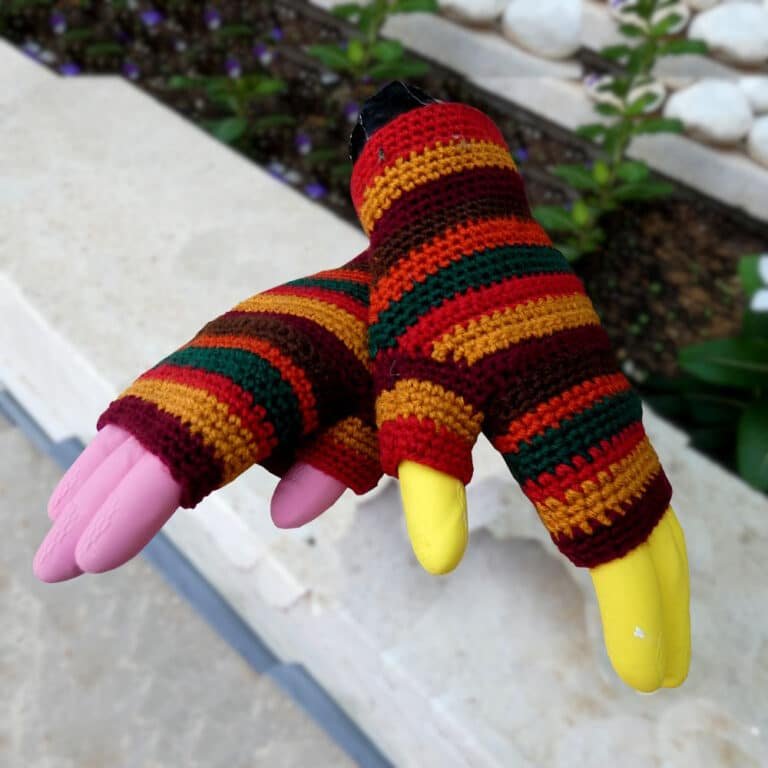
Crochet Fingerless Gloves Pattern
Contents